
Mountain Cur: Versatile American Hunting Dog
Apr
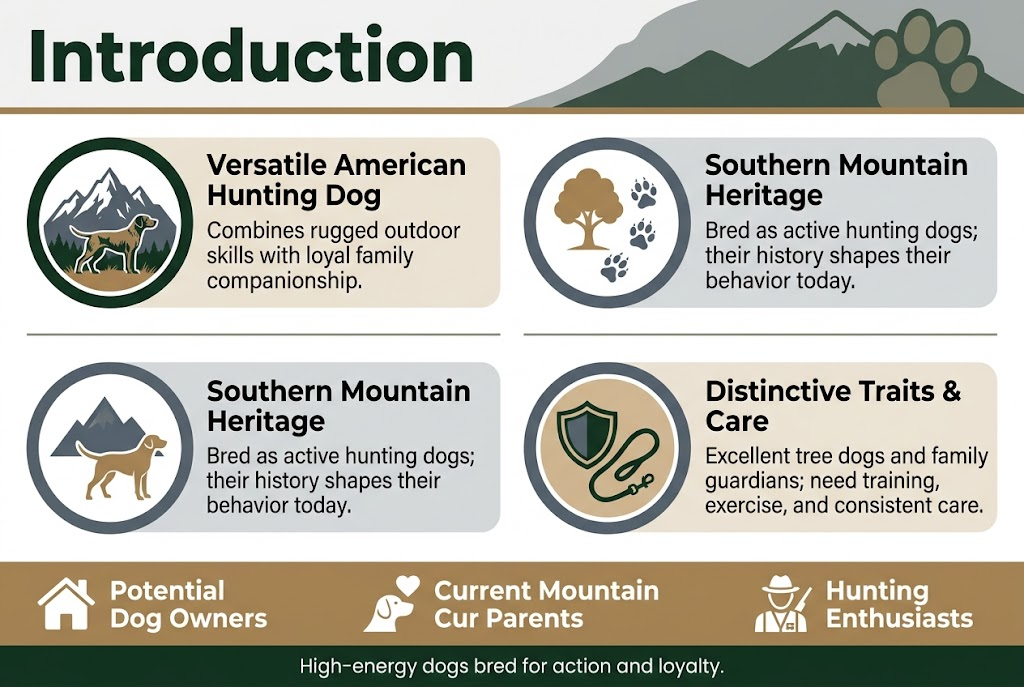
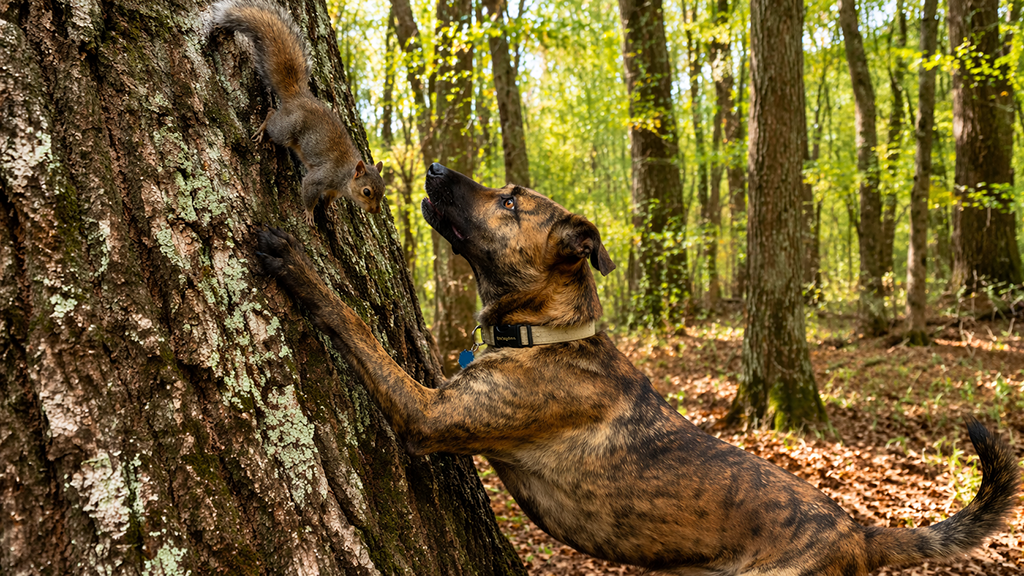
The Mountain Cur dog breed is a versatile American hunting dog that combines rugged outdoor skills with loyal family companionship. This guide is perfect for potential dog owners considering this breed, current Mountain Cur parents seeking to better understand their dogs, and hunting enthusiasts seeking a reliable working partner.
Mountain Curs aren’t your typical house pets – they’re bred for action and need owners who understand their high-energy nature. We’ll explore their fascinating heritage as Southern mountain hunting dogs and how their history shapes their behavior today. You’ll also discover the distinctive physical traits that make them excellent tree dogs and family guardians, plus get practical advice on training and care requirements that keep these active dogs happy and healthy.
Understanding the Mountain Cur’s Heritage and Purpose
Origins in Appalachian Mountain Regions
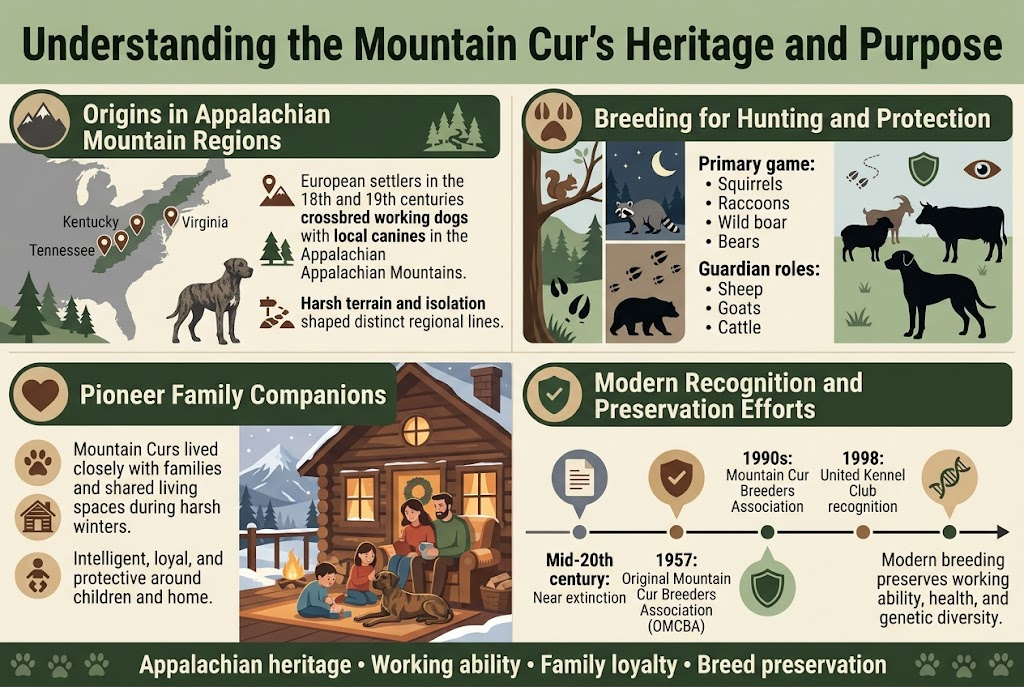
The Mountain Cur traces its roots deep into the rugged terrain of the Appalachian Mountains, where European settlers first arrived in the 18th and 19th centuries. These hardy pioneers brought their working dogs with them, crossbreeding them with local canines to create a breed perfectly suited for the challenging mountain environment. The harsh landscape of Kentucky, Tennessee, Virginia, and surrounding states demanded dogs capable of navigating steep terrain, dense forests, and unpredictable weather.
Mountain communities lived in relative isolation, which allowed the breed to develop distinct characteristics without outside interference. Each family line of Mountain Curs evolved slightly differently based on their specific regional needs and the particular challenges they faced in their mountain hollows and ridges.
Breeding for Hunting and Protection
Mountain Cur breeding focused on creating versatile working dogs that could handle multiple tasks around homesteads. These dogs needed exceptional scenting abilities to track game through thick underbrush and across rocky terrain. Their primary hunting targets included:
- Squirrels – requiring dogs with excellent treeing instincts
- Raccoons – demanding night hunting capabilities
- Wild boar – needing courage and tenacity
- Bears – requiring dogs brave enough to bay dangerous game
Beyond hunting, Mountain Curs served as livestock guardians, protecting sheep, goats, and cattle from predators like wolves, coyotes, and mountain lions. Their alert nature and protective instincts made them excellent watchdogs for isolated mountain farms where help could be days away.
Pioneer Family Companions
Mountain families relied on their Curs as essential members of the household. These dogs lived closely with families, often sharing living spaces during harsh winters. This intimate relationship created bonds that went beyond typical working dog arrangements. Children grew up alongside Mountain Curs, and the dogs developed strong loyalty and protective instincts toward family members.
The breed’s intelligence and eagerness to please made them excellent companions for children exploring mountain terrain. Their natural caution and ability to assess dangerous situations helped keep families safe in an environment filled with natural hazards and wildlife threats.
Modern Recognition and Preservation Efforts
The Mountain Cur faced near extinction in the mid-20th century as mountain communities modernized and traditional hunting practices declined. Dedicated breed enthusiasts began preservation efforts in the 1950s and 1960s, searching remote mountain areas for remaining purebred dogs.
The Original Mountain Cur Breeders Association, founded in 1957, established the first breed standards and registration system. Today, several organizations work to preserve Mountain Cur bloodlines:
| Organization | Founded | Focus |
|---|---|---|
| OMCBA | 1957 | Original bloodlines |
| Mountain Cur Breeders Association | 1990s | Breed promotion |
| United Kennel Club | 1998 | Official recognition |
Modern breeding programs emphasize maintaining the breed’s working abilities while ensuring genetic diversity and health.
Physical Characteristics That Define the Mountain Cur
Size and Weight Standards
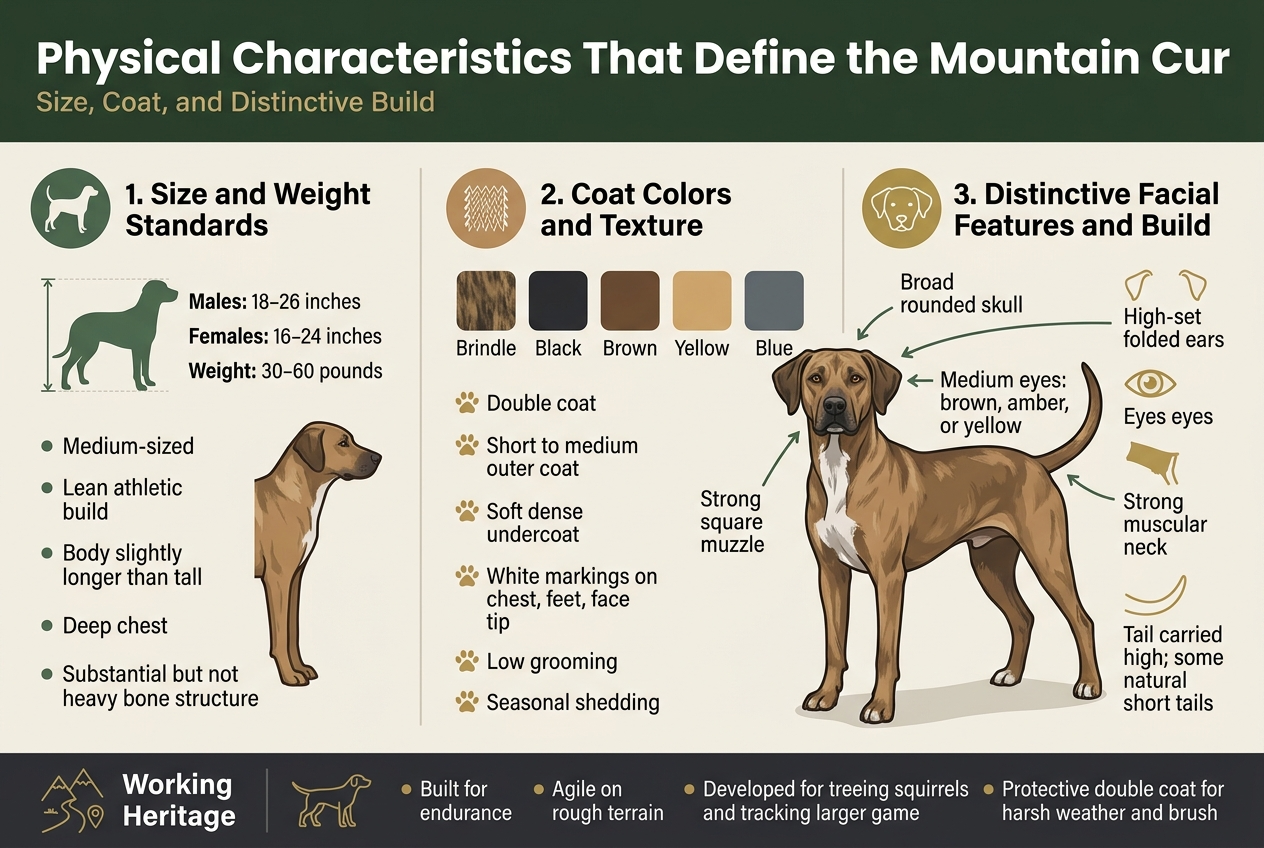
Mountain Curs are medium-sized dogs that pack impressive power into their compact frames. Males typically stand 18 to 26 inches tall at the shoulder, while females range from 16 to 24 inches. Weight varies considerably based on the dog’s specific lineage and working role, with most adults weighing between 30 to 60 pounds. The breed shows notable variation because different family lines were developed for specific hunting tasks – some bred for speed and agility when treeing squirrels, others built more heavily for tracking larger game like wild boar.
These dogs display a lean, athletic build that reflects their working heritage. Their bodies are slightly longer than they are tall, creating a rectangular silhouette that maximizes endurance and agility. The chest is deep and well-developed, supporting their incredible stamina during long hunting expeditions. Their bone structure is substantial but never heavy or cumbersome, allowing them to navigate rough mountain terrain with ease.
Coat Colors and Texture Variations
Mountain Curs sport a double coat that provides excellent protection against harsh weather and thick underbrush. The outer coat is short to medium in length, lying close to the body with a slightly coarse texture that repels water and debris. The undercoat is softer and denser, offering insulation during cold mountain nights.
Color variations are extensive and include:
- Brindle patterns (most common) in various shades
- Black with or without white markings
- Brown ranging from light tan to deep chocolate
- Yellow from pale cream to rich golden tones
- Blue (a dilute black appearing grayish)
White markings frequently appear on the chest, feet, and face tip. Some dogs display a distinctive white blaze running down the face or white collar markings. Solid colors are acceptable, but brindle patterns remain the most prized among traditional breeders. The coat requires minimal grooming but sheds seasonally, particularly during spring and fall transitions.
Distinctive Facial Features and Build
The Mountain Cur’s head displays a perfect balance of strength and intelligence. Their skull is broad and slightly rounded, tapering to a strong, square muzzle that’s roughly equal in length to the skull. This proportion gives them excellent scenting ability and a powerful bite for gripping game.
Their ears are perhaps their most distinctive feature – set high and dropping forward in a characteristic fold that protects the ear canal from debris while hunting. The ears are medium-sized and hang close to the head, creating an alert yet gentle expression.
Eyes are medium-sized and can be brown, amber, or occasionally yellow, always showing keen intelligence and alertness. The expression is confident and questioning, reflecting their natural curiosity and problem-solving abilities. Their neck is strong and well-muscled, flowing smoothly into sloping shoulders that provide excellent reach and drive.
The tail is typically carried high when alert or working, often curving slightly over the back. Some Mountain Curs are born with naturally short tails, while others have full-length tails that may be docked for working purposes, though this practice varies by region and breeder preference.
Temperament and Personality Traits for Families
Loyalty and Protective Instincts
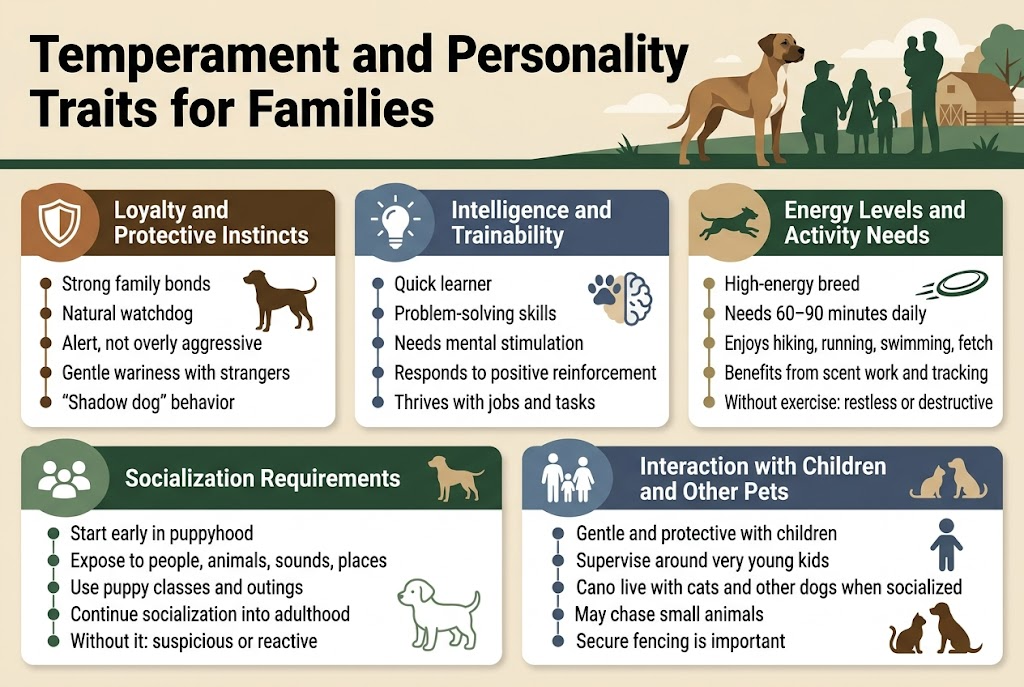
Mountain Curs form incredibly strong bonds with their families and take their guardian duties seriously. These dogs naturally position themselves as protectors of their territory and loved ones, making them excellent watchdogs without being unnecessarily aggressive. Their protective nature stems from generations of working alongside families in rural settings, where they needed to defend homesteads from wild animals and intruders.
You’ll notice your Mountain Cur becomes deeply attached to family members and may display a gentle wariness around strangers until proper introductions are made. This breed doesn’t bark excessively but will alert you to genuine threats or unusual activity around your property. Their loyalty runs so deep that many owners describe their Mountain Cur as a “shadow dog” that follows them from room to room throughout the day.
Intelligence and Trainability
Mountain Curs possess remarkable intelligence, manifesting in their problem-solving abilities and quick learning capacity. Originally bred to work independently while hunting, these dogs can think critically and make decisions without constant human direction. This intelligence makes them highly trainable, but it also means they need mental stimulation to prevent boredom-related behaviors.
Training sessions work best when kept engaging and varied. Mountain Curs respond exceptionally well to positive reinforcement techniques and enjoy having jobs to do. Their working heritage means they thrive when given tasks that challenge both their minds and bodies. Many owners successfully train their Mountain Curs in multiple disciplines, from basic obedience to advanced hunting skills, agility, and even therapy work.
Energy Levels and Activity Needs
Mountain Curs are high-energy dogs that require substantial daily exercise to maintain their physical and mental well-being. These aren’t couch potato companions – they need at least 60-90 minutes of vigorous activity each day. Their energy levels remain consistently high throughout their adult years, making them perfect partners for active families who enjoy outdoor adventures.
Daily walks alone won’t satisfy a Mountain Cur’s exercise requirements. They excel at activities like hiking, running, swimming, and playing fetch in large, secure areas. Many owners find that engaging their dog in tracking exercises or scent work helps burn both physical and mental energy effectively. Without adequate exercise, Mountain Curs may develop destructive behaviors or become restless and difficult to manage indoors.
Socialization Requirements
Early and ongoing socialization plays a crucial role in developing a well-rounded Mountain Cur. These dogs naturally tend to be wary of unfamiliar people and situations, making proper socialization essential during puppyhood and throughout their lives. Exposing young Mountain Curs to various people, animals, sounds, and environments helps them develop confidence and appropriate responses to new experiences.
Puppy socialization classes, regular outings to dog-friendly locations, and controlled interactions with friendly strangers all help raise a socially confident Mountain Cur. Adult dogs benefit from continued exposure to new experiences and regular interaction with well-behaved dogs. Without proper socialization, Mountain Curs may become overly suspicious or reactive toward unfamiliar situations.
Interaction with Children and Other Pets
Mountain Curs typically develop wonderful relationships with children in their own families, often becoming gentle and protective companions. Their natural guarding instincts extend to family children, and many Mountain Curs seem to understand that kids require special care and patience. However, supervision remains important, especially with very young children, as these are strong, energetic dogs.
When it comes to other pets, early introduction and proper socialization determine success. Mountain Curs can coexist peacefully with cats and other dogs when raised together or properly introduced. Their hunting background means they may chase smaller animals like rabbits or squirrels, so secure fencing becomes essential. Some Mountain Curs do better as only dogs, particularly if they haven’t been socialized with other pets from an early age. The key lies in understanding your individual dog’s personality and providing appropriate management and training.
Essential Care Requirements for Optimal Health

Daily Exercise and Mental Stimulation Needs
Mountain Curs are high-energy working dogs that demand substantial daily exercise to maintain their physical and mental well-being. These athletic canines require at least 90 minutes of vigorous activity spread throughout the day. A simple walk around the block won’t cut it for this breed – they need activities that challenge both their body and mind.
Running, hiking, and playing fetch are excellent ways to burn off their abundant energy. Mountain Curs excel at activities like agility training, tracking exercises, and even competitive sports like dock diving. Their natural hunting instincts make them perfect partners for outdoor adventures, whether you’re exploring forest trails or playing scent-work games in your backyard.
Mental stimulation proves just as crucial as physical exercise. Puzzle toys, treat-dispensing balls, and interactive games keep their intelligent minds engaged. Teaching them new tricks, practicing obedience commands, or setting up obstacle courses provides the mental challenges they crave. Without adequate stimulation, Mountain Curs may develop destructive behaviors like excessive barking, digging, or chewing.
Consider incorporating job-like activities into their routine. These dogs thrive when given specific tasks such as carrying a backpack during hikes or participating in search-and-rescue training exercises. Their working heritage means they feel most fulfilled when they have a purpose beyond just being a companion.
Grooming and Maintenance Routines
Mountain Curs are relatively low-maintenance when it comes to grooming, thanks to their short, dense coat. Weekly brushing with a firm-bristle brush or a rubber curry comb removes loose hair and distributes natural oils throughout their coat. During shedding seasons in spring and fall, you’ll want to increase brushing to 2-3 times per week to manage the extra hair.
Their weather-resistant double coat naturally repels dirt and debris, so baths are only necessary every 6-8 weeks or when they get particularly dirty from outdoor adventures. Over-bathing can strip essential oils and cause skin irritation. When bathing is needed, use a gentle dog shampoo and ensure thorough rinsing.
Pay special attention to their ears, which can trap moisture and debris during outdoor activities. Check and clean ears weekly using a veterinarian-approved ear cleaner and cotton balls. Never use cotton swabs, as they can push debris deeper into the ear canal.
Nail trimming should happen every 2-3 weeks, depending on how much time your dog spends on hard surfaces. Their active lifestyle often naturally wears down nails, but regular maintenance prevents overgrowth and splitting. Dental care includes brushing teeth 2-3 times per week with dog-specific toothpaste to prevent tartar buildup and maintain healthy gums.
Nutritional Guidelines for Active Dogs
Active Mountain Curs require high-quality nutrition to fuel their energetic lifestyle and maintain optimal health. Look for dog foods with protein as the first ingredient, aiming for formulas with 25-30% protein. This supports muscle development and repair after intense exercise sessions.
Adult Mountain Curs typically need 2-3 cups of high-quality dry food daily, divided into two meals. However, individual needs vary based on age, weight, activity level, and metabolism. Working dogs or those engaged in intense daily activities may require additional calories to maintain their energy levels and body condition.
Choose foods rich in omega-3 fatty acids to support joint health and maintain their coat’s natural shine. Avoid foods with excessive fillers, by-products, or artificial preservatives. Many Mountain Cur owners find success with grain-free or limited ingredient diets, especially for dogs with food sensitivities.
| Life Stage | Feeding Guidelines | Key Considerations |
|---|---|---|
| Puppy (2-12 months) | 3-4 meals daily, puppy formula | Higher protein (28-32%) for growth |
| Adult (1-7 years) | 2 meals daily, maintenance formula | Adjust portions based on activity level |
| Senior (7+ years) | 2 meals daily, senior formula | Lower calories, joint support supplements |
Fresh water should always be available, especially after exercise sessions. Monitor your dog’s body condition regularly and adjust portions accordingly – you should be able to feel their ribs without pressing hard, but they shouldn’t be visible.
Training Your Mountain Cur for Success
Early Socialization Strategies
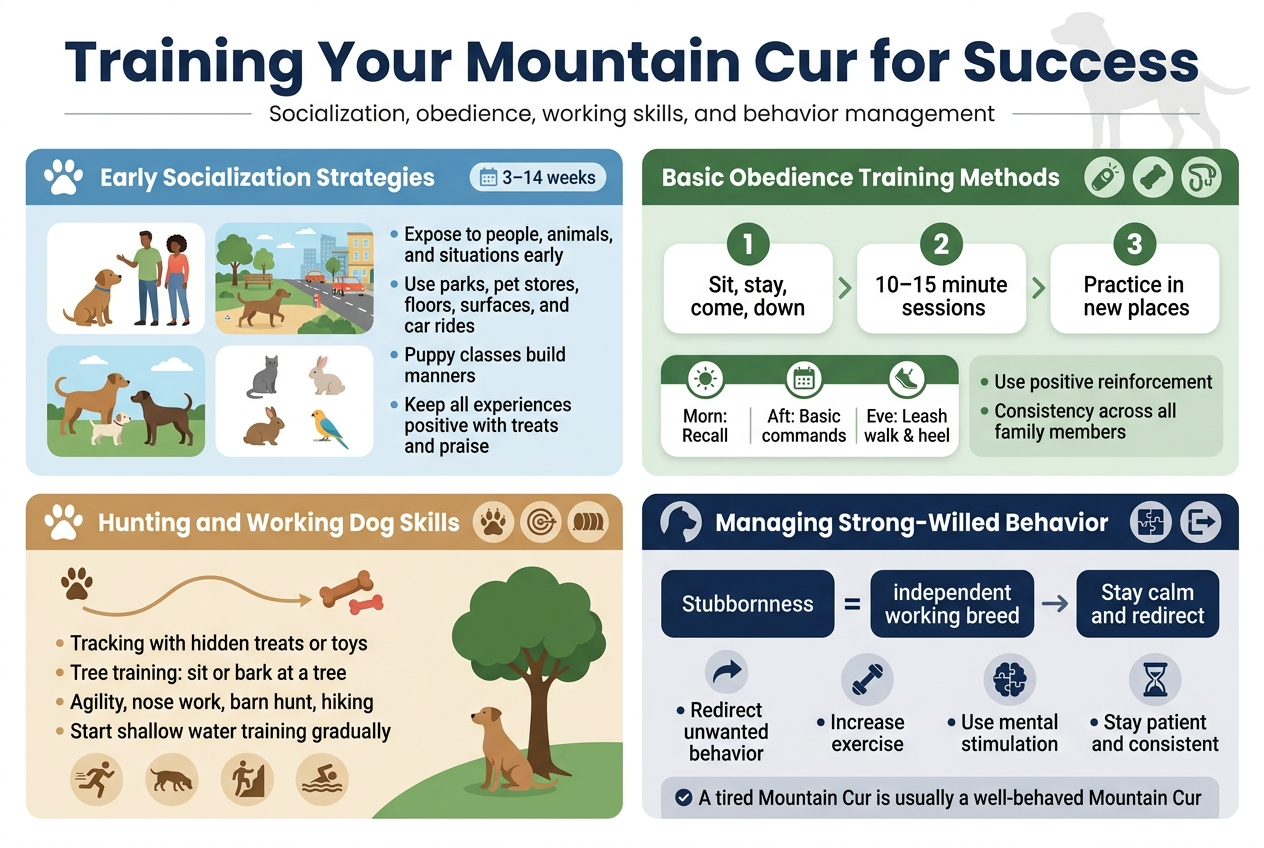
Mountain Curs need exposure to different people, animals, and situations from an early age to develop into well-rounded dogs. Start socialization during the critical period between 3-14 weeks old when puppies are most receptive to new experiences.
Introduce your Mountain Cur puppy to various environments like busy streets, parks, pet stores, and different types of flooring and surfaces. This breed can be naturally cautious around strangers, so positive experiences with different people – including children, elderly individuals, and people wearing hats or uniforms – help prevent fearfulness later.
Arrange controlled meetings with other dogs of different sizes and temperaments. Puppy classes provide excellent socialization opportunities while teaching basic manners. Since Mountain Curs have strong hunting instincts, early exposure to smaller animals like cats, rabbits, or birds can help manage their prey drive in controlled settings.
Car rides, vet visits, and grooming sessions should become routine positive experiences. Use treats, praise, and patience during these activities. The goal is creating confident dogs who can adapt to new situations without stress or aggression.
Basic Obedience Training Methods
Mountain Curs respond best to positive reinforcement training that respects their intelligence and independent nature. These dogs think for themselves, so training sessions should be engaging and purposeful rather than repetitive drilling.
Start with essential commands like sit, stay, come, and down. Use high-value treats and enthusiastic praise to motivate your dog. Keep training sessions short – 10-15 minutes – to maintain their attention and prevent boredom.
Core Training Schedule:
- Morning: 10-minute focus on recall training
- Afternoon: Basic commands practice with treats
- Evening: Leash walking and heel training
Consistency across all family members is crucial. Everyone should use the same commands and reward system. Mountain Curs can become confused or selective about following commands if different people use different approaches.
Practice commands in various locations once your dog masters them at home. This breed needs to learn that “sit” means sit whether you’re in the backyard, at the park, or visiting friends.
Hunting and Working Dog Skills
Mountain Curs were bred to work, and many retain strong hunting instincts that can be channeled into productive activities. Even if you don’t hunt, these skills provide mental stimulation and physical exercise that this breed craves.
Tracking exercises tap into their natural abilities. Start by hiding treats or toys around the yard and encouraging your dog to find them using scent. Gradually increase difficulty by creating longer tracks or hiding items in more challenging locations.
Tree training appeals to their squirrel and raccoon hunting heritage. While you won’t actually hunt, you can teach your Mountain Cur to indicate when they’ve found something interesting by sitting or barking at the base of a tree. This satisfies their instinct to “tree” prey.
Working Dog Activities:
- Agility training for physical and mental challenges
- Nose work competitions for scent training
- Barn hunt events to practice hunting skills safely
- Hiking and backpacking to build endurance
Water training can be valuable since many Mountain Curs enjoy swimming. Start in shallow water and gradually build their confidence. This provides excellent exercise and can be useful for hunting dogs who might encounter streams or ponds.
Managing Strong-Willed Behavior
Mountain Curs have independent personalities that can sometimes manifest as stubbornness or selective hearing. This isn’t defiance – it’s their breeding showing through. They were developed to work independently and make decisions in the field.
Establish yourself as a fair but firm leader through consistent rules and boundaries. Don’t use harsh corrections or intimidation tactics, which can damage trust with this sensitive breed. Instead, make following your guidance more rewarding than ignoring it.
When your Mountain Cur tests boundaries – and they will – stay calm and redirect their energy into appropriate activities. If they’re being destructive, provide better outlets for their energy like puzzle toys, extra exercise, or training sessions.
Effective Management Strategies:
- Redirect unwanted behavior immediately
- Increase exercise on particularly challenging days
- Use mental stimulation to tire out active minds
- Stay patient and consistent with expectations
Some Mountain Curs may try to assert dominance over resources like food, toys, or sleeping spots. Address these behaviors early by teaching them to wait for permission and respect your decisions about household rules. Trading games where they give up items in exchange for treats help prevent guarding behaviors.
Remember that a tired Mountain Cur is usually a well-behaved Mountain Cur. Many behavioral issues stem from insufficient physical and mental stimulation rather than true disobedience.
Health Considerations and Lifespan Expectations

Common Health Issues to Monitor
Mountain Curs are generally hardy dogs, but like all breeds, they can develop certain health conditions that owners should watch for. Hip dysplasia ranks among the most common concerns, where the hip joint doesn’t form properly, leading to arthritis and mobility issues later in life. You’ll want to watch for signs like difficulty getting up, reluctance to jump or climb stairs, and an altered gait.
Eye problems also appear in some Mountain Curs, including progressive retinal atrophy (PRA) and cataracts. PRA causes gradual vision loss, while cataracts create cloudiness in the lens. Regular eye exams can catch these conditions early, and genetic testing helps responsible breeders avoid passing these traits to puppies.
Ear infections plague many Mountain Curs due to their floppy ears that trap moisture and debris. Check your dog’s ears weekly for redness, odor, or excessive wax buildup. Clean them regularly with a veterinarian-approved solution to prevent bacterial and yeast infections.
Some Mountain Curs develop allergies, both food-related and environmental. Symptoms include excessive scratching, hot spots, ear infections, and digestive upset. Working with your vet to identify triggers through elimination diets or allergy testing can provide relief.
Bloat, or gastric dilatation-volvulus, poses a serious emergency risk for deep-chested dogs like Mountain Curs. This condition causes the stomach to twist and trap gas, requiring immediate veterinary intervention.
Preventive Care and Regular Checkups
Staying ahead of health issues through preventive care saves money and ensures your Mountain Cur lives their best life. Annual wellness exams become the foundation of good health, allowing your veterinarian to catch problems before they become serious. During these visits, your vet will perform a complete physical examination, update vaccinations, and discuss any concerns you’ve noticed.
Dental care deserves special attention since Mountain Curs can develop periodontal disease without proper maintenance. Brush your dog’s teeth several times per week using dog-safe toothpaste, and provide dental chews or toys that help scrape away plaque. Professional cleanings every few years keep teeth and gums healthy.
Parasite prevention protects your Mountain Cur from fleas, ticks, heartworms, and intestinal parasites. Year-round prevention works best, even in colder climates where some parasites remain active. Your vet can recommend the most effective products for your area.
Spaying or neutering reduces the risk of certain cancers and eliminates unwanted pregnancies. Most vets recommend this surgery between 6-12 months of age, though the exact timing depends on your dog’s size and development.
Regular blood work, especially as your Mountain Cur ages, helps detect kidney disease, liver problems, diabetes, and other conditions before symptoms appear. Many vets recommend annual blood panels starting around age 7, with more frequent monitoring for senior dogs.
Expected Lifespan and Aging Care
Mountain Curs typically live 12-16 years when properly cared for, which represents excellent longevity for a medium-sized breed. Their working dog heritage contributes to this robust health, as these dogs were bred for endurance and resilience rather than appearance alone.
As your Mountain Cur enters their senior years around age 8-10, their needs begin changing. Joint supplements containing glucosamine and chondroitin can help maintain mobility and reduce arthritis discomfort. Many senior dogs benefit from orthopedic beds that provide better support for aging joints.
Mental stimulation becomes even more important for older Mountain Curs, as cognitive decline can affect some senior dogs. Puzzle toys, new experiences, and continued training sessions keep their minds sharp. However, adjust activity levels to match their energy and physical capabilities.
Regular monitoring takes on added importance during the senior years. Watch for changes in appetite, drinking habits, sleep patterns, and bathroom habits, as these often signal developing health issues. Weight management becomes critical since extra pounds stress aging joints and organs.
Consider twice-yearly vet visits for senior Mountain Curs, allowing for closer monitoring of age-related changes. Your vet might recommend additional blood work, blood pressure monitoring, or other diagnostic tests to catch problems early. With attentive care and regular veterinary support, your Mountain Cur can enjoy many comfortable, happy years well into their teens.
Determining if a Mountain Cur Fits Your Lifestyle

Ideal Living Environments and Space Requirements
Mountain Curs thrive in homes with plenty of room to roam. A securely fenced yard isn’t just nice to have—it’s pretty much essential for these energetic dogs. They need space to burn off their natural drive to hunt, track, and explore. While some adaptable dogs can squeeze into apartment living, Mountain Curs really struggle in cramped quarters.
The ideal setup includes at least half an acre of fenced property, though more space is always better. These dogs have strong prey drives and will chase anything that moves, so a solid fence at least six feet high prevents them from taking off after squirrels, rabbits, or neighborhood cats. Chain-link, wooden privacy, or electric fencing all work well, but the key is making sure there are no escape routes.
Rural and suburban environments suit Mountain Curs best. They appreciate being able to patrol their territory and investigate interesting scents without constant leash restrictions. Urban dwellers face bigger challenges meeting their space needs, though dedicated owners with access to large dog parks or hiking trails can sometimes make it work.
Inside the home, Mountain Curs don’t need luxury accommodations, but they do appreciate having their own space—a comfortable bed in a quiet corner works perfectly. They’re not typically destructive indoors when their exercise needs are met, but boredom combined with limited space can lead to unwanted behaviors.
Activity Level Compatibility
Mountain Curs pack serious energy into their compact frames. These dogs were bred to work all day in challenging terrain, and that stamina doesn’t just disappear when they become family pets. Potential owners need to honestly assess whether their lifestyle can match this breed’s high activity requirements.
Daily exercise needs include at least 60-90 minutes of vigorous activity. This isn’t a leisurely stroll around the block kind of dog. Mountain Curs want to hike, run, track, and engage in activities that challenge both their bodies and minds. They excel at activities like:
- Trail running and hiking
- Agility training
- Scent work and tracking games
- Fetch sessions that last more than five minutes
- Swimming (many love water)
- Bike riding (with proper conditioning)
Weekend warriors who are sedentary during the week will struggle with this breed. Mountain Curs need consistent daily activity, not just weekend adventures. They’re perfect companions for active families who enjoy outdoor activities year-round.
Owners who can’t meet these exercise requirements often end up with frustrated, destructive dogs. A tired Mountain Cur is a good Mountain Cur, while an under-exercised one becomes a household hurricane.
Time Commitment for Training and Exercise
Mountain Curs demand significant daily time investment from their families. Between exercise, training, and mental stimulation, owners should plan on dedicating 2-3 hours each day to meeting their dog’s needs.
Exercise alone requires 1.5-2 hours daily, broken into multiple sessions. A typical schedule might include a 30-minute morning run, midday mental enrichment activities, and an evening hike or extended play session. This breed doesn’t do well with sporadic exercise—they need consistent daily outlets for their energy.
Training represents another major time commitment, especially during the first two years. Mountain Curs are intelligent but independent thinkers who need patient, consistent guidance. Puppy training classes, basic obedience, and ongoing socialization require weekly time investments plus daily practice sessions at home.
Mental stimulation is just as important as physical exercise. These smart dogs need puzzle toys, training sessions, and problem-solving activities to prevent boredom. Owners should budget at least 30 minutes daily for mental enrichment activities.
| Daily Time Requirements | Hours |
|---|---|
| Exercise | 1.5-2 hours |
| Training/Mental work | 30-45 minutes |
| General care | 30 minutes |
| Total daily commitment | 2.5-3+ hours |
People with demanding work schedules, young children requiring constant attention, or other time-intensive commitments should carefully consider whether they can realistically meet these requirements before bringing home a Mountain Cur.

Mountain Curs bring together the best of working dog heritage with loyal family companionship. These sturdy, medium-sized dogs excel as both hunting partners and household guardians, thanks to their protective instincts, high energy levels, and strong bonds with their families. Their short coat makes grooming manageable, but their intelligence and drive mean they need consistent training and plenty of physical activity to stay happy and well-behaved.
Before welcoming a Mountain Cur into your home, honestly assess your lifestyle and commitment level. These dogs thrive with active owners who can provide daily exercise, mental stimulation, and clear leadership. If you’re ready for a devoted companion who will challenge you to stay active while offering unwavering loyalty in return, a Mountain Cur might be the perfect addition to your family. Research reputable breeders, prepare for their exercise needs, and get ready for years of adventure with one of America’s most capable working breeds.
