
Foundation Stock Service
Why Lapponian Herders Shouldn’t Be Underrated
Apr
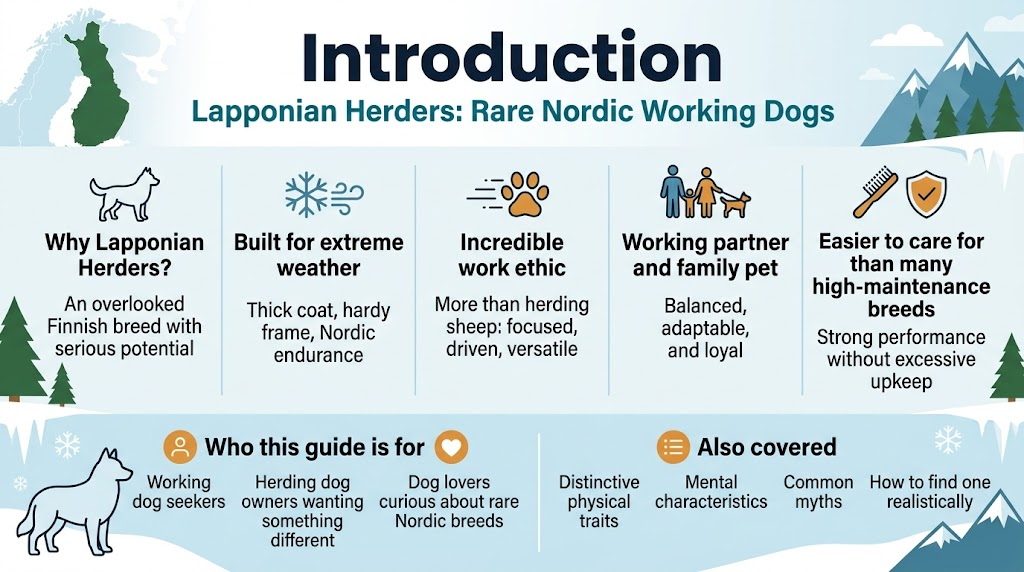
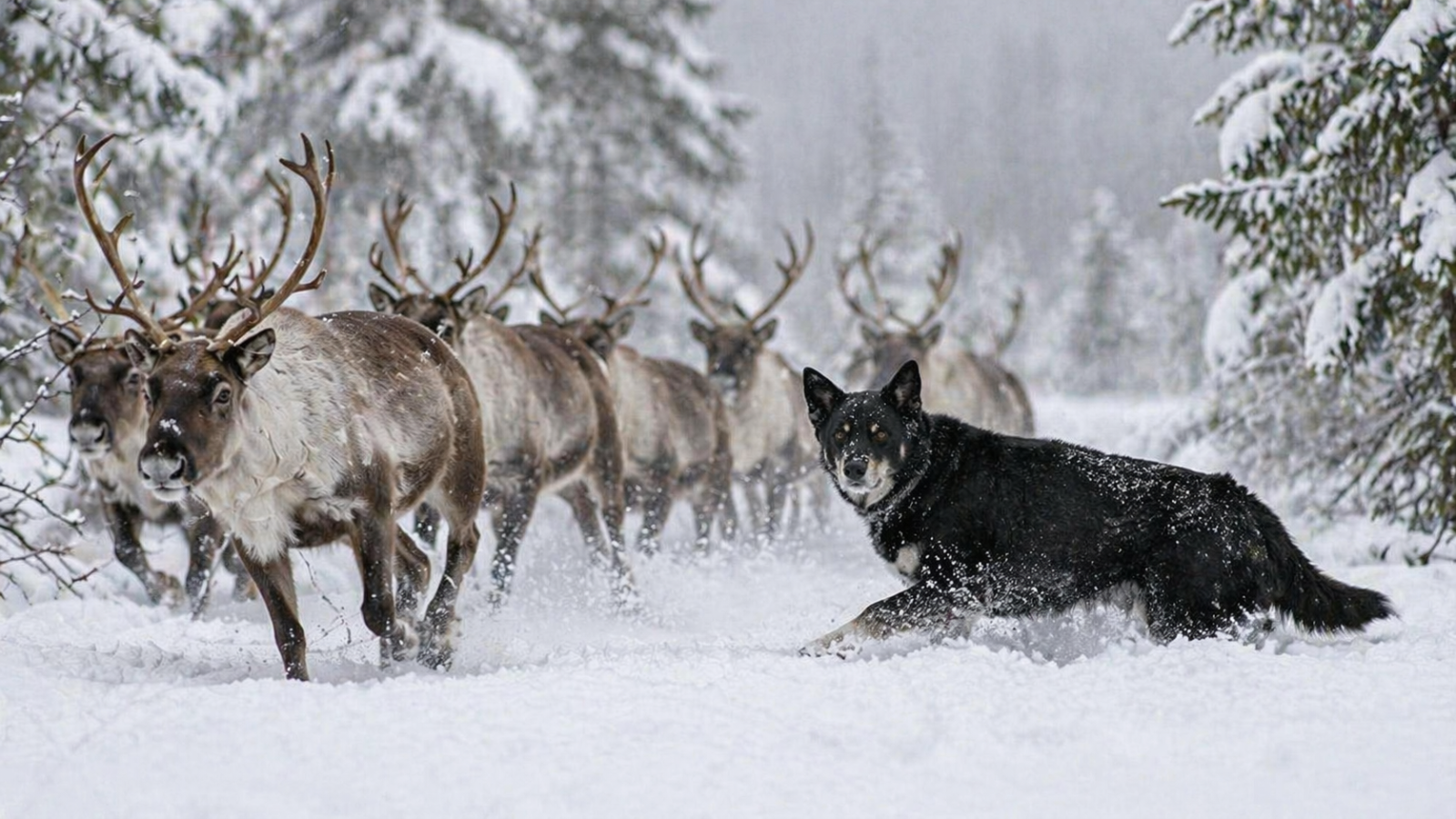
Most dog enthusiasts have never heard of Lapponian Herders, and that’s a real shame. This incredible Finnish breed deserves way more recognition than it gets.
This guide is for anyone considering a working dog breed, current herding dog owners looking for something different, or dog lovers curious about rare Nordic breeds that pack serious potential.
Lapponian Herders bring unique traits you won’t find in popular breeds – they’re built for extreme weather and have an incredible work ethic that goes far beyond moving sheep. We’ll explore their distinctive physical and mental characteristics that set them apart from other herding dogs, plus their surprising versatility as both working partners and family pets.
You’ll also discover why these dogs are actually easier to care for than many high-maintenance breeds, despite their impressive performance capabilities. We’ll clear up the biggest myths about Lapponian Herders and show you realistic ways to find one if this amazing breed sounds like your perfect match.
Physical and Mental Traits
Arctic Adaptation
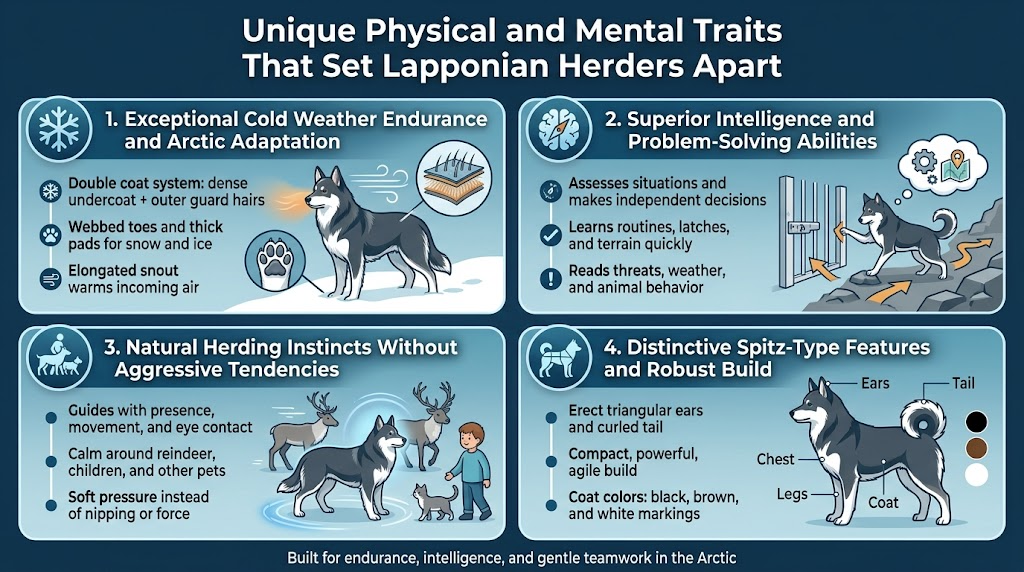
Lapponian Herders developed their legendary cold resistance through centuries of survival in some of Earth’s most brutal climates. Their double coat system works like a natural survival suit – the dense undercoat traps warm air close to their body, while the longer outer guard hairs repel moisture and wind. This isn’t just thick fur; it’s an engineered climate control system that keeps them comfortable in temperatures that would send other breeds running for heated shelters.
Watch a Lapponian Herder work in subzero conditions, and you’ll see something remarkable. While other dogs slow down or seek warmth, these canines maintain their energy and focus as if the weather barely registers. Their paws have adapted too, with webbed toes that act like natural snowshoes and thick pads that resist ice buildup. Even their breathing system has evolved – their elongated snouts warm incoming air before it reaches their lungs, preventing the respiratory stress that affects many breeds in extreme cold.
Intelligence and Problem-Solving
Intelligence in working dogs goes beyond basic obedience, and Lapponian Herders demonstrate the kind of thinking that makes experienced handlers take notice. These dogs don’t just follow commands – they assess situations, anticipate problems, and make independent decisions when their human partners aren’t available to guide them.
Their problem-solving skills show up in unexpected ways. Many owners report that their Lapponian Herders figure out complex gate latches, navigate challenging terrain on hikes, and even learn household routines without direct training. This cognitive flexibility comes from generations of breeding dogs who needed to think on their feet while managing reindeer herds across vast, unpredictable landscapes.
What really sets them apart is their ability to read situations and respond appropriately. They can distinguish between a genuine threat and normal activity, adjust their herding pressure based on the animals they’re working with, and even modify their behavior based on weather conditions or terrain challenges.
Natural Herding Instincts
Most herding breeds carry some level of intensity that can translate into nipping, excessive barking, or territorial behavior. Lapponian Herders break this mold completely. Their herding style relies on presence, movement, and gentle guidance rather than intimidation or force.
This gentle approach made them perfect partners for Sami reindeer herders who needed dogs that could move livestock without causing stress or injury. Reindeer are skittish animals that panic easily so that any aggressive herding behavior would have been counterproductive. The dogs learned to use body positioning, eye contact, and subtle pressure to guide herds while maintaining calm energy.
Modern Lapponian Herders still carry these traits, making them excellent with children, other pets, and even livestock. Their herding instinct might show up as gently guiding kids away from busy streets or keeping family cats from wandering too far, but always with a soft touch that feels more like guidance than control.
Spitz-Type Features
The classic spitz silhouette of erect triangular ears, curled tail, and compact build isn’t just for looks – every feature serves a practical purpose. Their pointed ears provide excellent directional hearing and help them stay warm in cold weather. The tightly curled tail, which often rests over their back, can cover their nose and face when they sleep in snow, creating a warm breathing pocket.
Their build strikes the perfect balance between power and agility. At 18-21 inches tall and typically weighing 55-65 pounds, they’re substantial enough to work long days in difficult conditions but agile enough to navigate rocky terrain or deep snow. Their broad chest houses strong lungs for sustained work at altitude, while their sturdy legs and compact feet provide a stable footing on uneven ground.
The breed’s coat colors tell stories of their heritage – from solid black and brown to striking combinations with white markings. These aren’t just pretty patterns; the color variations helped herders identify individual dogs from a distance across snowy landscapes, making them both functional and beautiful.
Capabilities Beyond Traditional Herding
Search and Rescue
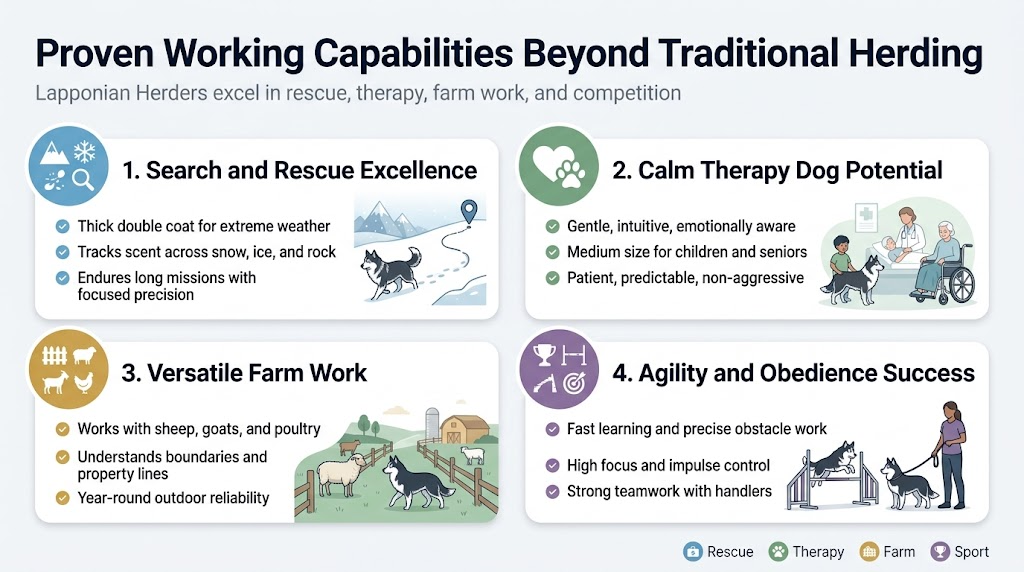
Lapponian Herders possess an extraordinary combination of traits that make them natural search-and-rescue candidates. Their thick double coat protects them in extreme weather conditions, while their compact, athletic build allows them to navigate treacherous terrain that would challenge larger breeds. These dogs were originally bred to work in the harsh Arctic conditions of northern Scandinavia, giving them an innate ability to track scents across snow, ice, and rocky landscapes.
Their exceptional problem-solving skills shine during search operations. Unlike some breeds that rely purely on instinct, Lapponian Herders demonstrate remarkable analytical thinking when faced with obstacles. They can independently assess dangerous situations and find alternative routes to reach their target. Professional search-and-rescue teams in Finland and Norway have documented cases in which these dogs successfully located missing persons in whiteout conditions and subzero temperatures, while other breeds struggled.
The breed’s natural endurance allows them to work extended shifts without fatigue. Their focused temperament means they rarely get distracted by wildlife or environmental stimuli during critical missions. Many handlers report that Lapponian Herders maintain their concentration for hours, systematically covering ground with methodical precision.
Therapy Dog Potential
The gentle, intuitive nature of Lapponian Herders makes them exceptional candidates for therapy dog work. Their calm demeanor, combined with remarkable emotional intelligence, allows them to sense human distress and respond appropriately. Unlike more excitable breeds, these dogs naturally modulate their energy levels to match their environment and the people around them.
Their medium size provides the perfect balance for therapy work – large enough to provide comforting pressure and presence, yet small enough to safely interact with children, elderly patients, or individuals with mobility limitations. The breed’s inherent patience makes it ideal for working with special-needs populations who may require extra time or have unpredictable movements.
Lapponian Herders rarely display aggressive tendencies or sudden behavioral changes, crucial qualities for therapy work. Their consistent, predictable responses help create safe therapeutic environments. Many therapy programs value their ability to remain focused on their handler’s commands while simultaneously providing comfort to patients.
Versatile Farm Work
Beyond their traditional reindeer herding heritage, Lapponian Herders excel with various livestock types. Their natural herding instincts translate beautifully to sheep, goats, and even poultry management. The breed’s intelligence allows them to quickly learn the specific handling requirements for different animals, adjusting their approach based on the livestock’s temperament and size.
These dogs demonstrate exceptional boundary awareness, naturally understanding property lines and keeping animals within designated areas without excessive aggression or stress to the livestock. Their gentle mouth and controlled bite inhibition make them safe around young animals, while their confident presence commands respect from larger livestock.
Modern farmers appreciate their versatility in daily operations. Lapponian Herders can assist with feeding routines, help move animals between pastures, and alert owners to potential problems. Their weather resistance means they can work year-round in outdoor conditions that would sideline other breeds.
Agility and Obedience
Competitive dog sports showcase another dimension of Lapponian Herder capabilities. Their athletic build and natural agility make them formidable competitors in obstacle courses. The breed’s strong desire to please their handlers, combined with their problem-solving abilities, creates dogs that excel at learning complex sequences and executing them with precision.
In obedience competitions, their focus and trainability become evident. Lapponian Herders typically score high in attention exercises and demonstrate excellent impulse control. Their working heritage means they naturally look to their handlers for direction and respond quickly to commands, even in distracting environments.
The breed’s success in these venues often surprises judges and competitors who may be unfamiliar with their capabilities. Their consistent performance across different types of competitions demonstrates their adaptability and mental flexibility. Many handlers report that training sessions become collaborative experiences, with the dogs actively engaging in the learning process rather than simply following commands.
Low Maintenance Requirements
Minimal Grooming Needs
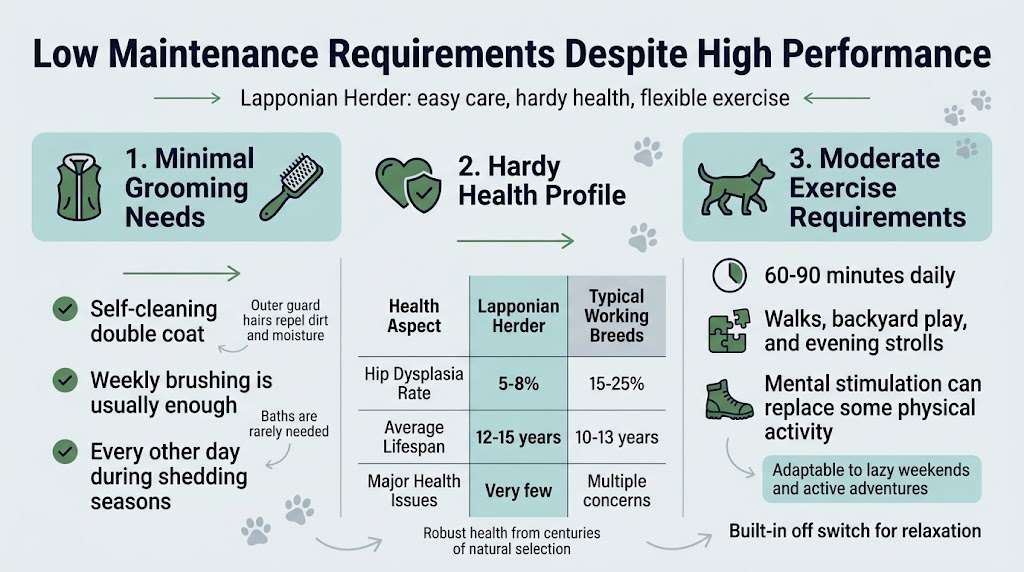
The Lapponian Herder’s double coat might look like a grooming nightmare, but it’s actually a marvel of natural engineering. This breed’s coat has self-cleaning properties that would make any busy owner smile. The outer guard hairs naturally repel dirt, moisture, and debris, while the dense undercoat provides insulation without matting easily.
Weekly brushing sessions are usually enough to keep these dogs looking their best. During shedding seasons in spring and fall, you’ll need to bump this up to every other day, but even then, the process is straightforward. Unlike breeds with silky or curly coats that require professional grooming every few months, Lapponian Herders maintain their appearance with basic home care.
The coat’s natural oils distribute evenly, preventing that “doggy smell” many owners dread. Baths are rarely needed unless your dog has rolled in something particularly unpleasant. When you do bathe them, their coat dries quickly and returns to its natural protective state without special products or lengthy blow-drying sessions.
Hardy Health Profile
Lapponian Herders benefit from centuries of natural selection in harsh Arctic conditions. This breeding history created dogs with robust health and impressive longevity, often living 12-15 years with minimal health complications.
Common genetic issues that plague many purebreds are refreshingly rare in this breed. Hip dysplasia occurs at much lower rates compared to similar-sized working dogs. Eye problems, while present in the gene pool, affect only a small percentage of the population when dogs come from responsible breeders who health-test their breeding stock.
| Health Aspect | Lapponian Herder | Typical Working Breeds |
|---|---|---|
| Hip Dysplasia Rate | 5-8% | 15-25% |
| Average Lifespan | 12-15 years | 10-13 years |
| Major Health Issues | Very few | Multiple concerns |
Their hearty constitution means fewer vet bills and less worry about fragile health. These dogs adapted to survive in temperatures that would challenge most breeds, creating a naturally resilient genetic foundation.
Moderate Exercise Requirements
Don’t let their working heritage fool you into thinking these dogs need hours of daily exercise. Lapponian Herders are surprisingly adaptable to modern lifestyles, requiring about 60-90 minutes of activity daily – easily achievable for most families.
A morning walk, some backyard playtime, and an evening stroll typically meet their needs. They’re content with quality over quantity when it comes to exercise. Mental stimulation through puzzle toys, training sessions, or interactive games can substitute for some physical activity on busy days.
These dogs excel at reading their owner’s energy levels. On lazy weekends, they’re happy lounging around the house. When you’re ready for a hiking adventure, they’ll eagerly join in. This flexibility makes them perfect for people who want an active companion without the pressure to meet extreme exercise demands every day.
Unlike high-drive breeds that become destructive without constant stimulation, Lapponian Herders possess an “off switch” that allows them to relax when the workday is done.
Perfect Family Companion

Gentle and Patient with Children
Lapponian Herders possess an almost magical ability to connect with children. These dogs seem to instinctively understand the difference between a toddler’s clumsy movements and an adult’s intentional actions. You’ll often find them lying calmly while little hands pull at their ears or tails, showing remarkable tolerance that many breeds don’t possess.
Their herding background actually works in their favor here. The same instincts that made them gentle with reindeer calves translate beautifully to interactions with human children. They know when to engage in play and when to step back, creating natural boundaries that keep everyone safe. Parents consistently report how their Lapponian Herders seem to “babysit” their children during outdoor play, gently redirecting wandering toddlers back to safety zones.
Loyal Protective Instincts
The protective nature of Lapponian Herders strikes the perfect balance between alertness and aggression. Unlike some breeds that can become overly defensive, these dogs read situations carefully before reacting. They’ll bark to alert you of strangers approaching your property, but won’t escalate unless they perceive a genuine threat.
This measured response comes from their working heritage. Sami herders needed dogs that could distinguish between wolves and wandering reindeer from neighboring herds. Modern Lapponian Herders apply the same discernment to family life, protecting without becoming a liability risk. They’re naturally suspicious of strangers but warm up appropriately once introduced, making them excellent judges of character.
Calm Indoor Behavior
Many people assume that working dogs can’t settle indoors, but Lapponian Herders defy this stereotype completely. After their exercise needs are met, they transform into remarkably calm house companions. You’ll find them contentedly napping by your feet while you work or quietly observing family activities without demanding constant attention.
Their calm demeanor indoors stems from their Arctic origins, where conserving energy during harsh weather was essential for survival. They’ve retained this ability to “switch off” when appropriate, making them suitable for apartment living provided they receive adequate daily exercise. Unlike high-strung breeds that pace or become destructive when bored, Lapponian Herders settle naturally into household rhythms.
Excellent Socialization
Lapponian Herders integrate remarkably well with multi-pet households when properly introduced. Their herding instincts make them naturally aware of other animals without being predatory. Many owners successfully keep them with cats, rabbits, and even birds, though proper introductions and supervision remain important.
Their pack mentality, developed through working in groups, translates into easily accepting other dogs. They rarely show same-sex aggression and often become peacekeepers in multi-dog homes. With cats, they may initially try to herd them, but they quickly learn household rules and boundaries. Their intelligence makes training for appropriate pet interactions straightforward and lasting.
Common Misconceptions

Breaking the Myth of High-Maintenance Arctic Breeds
Many people automatically assume that dogs from Arctic regions require extensive grooming, special diets, and constant attention. This stereotype couldn’t be further from the truth when it comes to Lapponian Herders. These dogs actually have relatively simple care needs compared to many popular breeds.
Their double coat, while thick, is naturally self-cleaning and dirt-resistant. A weekly brushing session keeps them looking great, with more frequent attention needed only during seasonal shedding periods. Unlike breeds that require professional grooming every six weeks, Lapponian Herders thrive with basic home care.
The “Arctic breed equals high energy” myth also needs debunking. While these dogs enjoy activity, they’re not hyperactive. They’re perfectly content with moderate daily exercise and mental stimulation. A good walk, some playtime, and occasional hiking satisfy their needs without demanding marathon training sessions.
Weather tolerance works both ways too. Yes, they love cold weather, but they adapt well to moderate climates. Air conditioning in summer and avoiding peak heat hours keep them comfortable in warmer regions.
Limited Breeding Outside Scandinavia
The rarity of Lapponian Herders outside their native regions creates real challenges for potential owners. Currently, fewer than a dozen active breeders operate in North America, with similar numbers across the rest of Europe and virtually none elsewhere.
This scarcity stems from several factors:
- Small foundation stock: Only a limited number of dogs were exported from Finland and Sweden in the past decades
- Breed preservation focus: Scandinavian breeders prioritize maintaining working lines over expanding internationally
- Registration requirements: Import regulations and breed recognition vary significantly between countries
- Limited awareness: Most dog enthusiasts haven’t heard of the breed, reducing demand
Wait lists with reputable breeders often stretch 12-18 months. Puppy prices typically range from $2,000 to $4,000, reflecting the breed’s rarity rather than excessive profit margins. Some breeders require potential owners to visit their facilities or provide extensive references about their experience with working breeds.
Import costs from Scandinavia can add another $1,500 to $3,000 to the total investment, including health testing, shipping, and quarantine requirements.
Realistic Expectations for Potential Owners
Getting a Lapponian Herder means entering a long-term commitment with unique rewards and responsibilities. These dogs bond deeply with their families but may remain somewhat reserved with strangers initially. Socialization during puppyhood helps, but their natural caution shouldn’t be mistaken for unfriendliness.
Training requires consistency rather than intensity. Lapponian Herders are intelligent problem-solvers who respond well to positive reinforcement but can become stubborn when harsh methods are used. They need mental challenges to prevent boredom, making puzzle toys and varied activities essential.
The herding instinct never fully disappears. Expect some chasing of moving objects, gentle “herding” of children, and strong prey drive around small animals. Early training helps manage these behaviors rather than eliminate them.
Space considerations matter more than whether it’s an apartment or a house. These dogs need room to move and explore safely. A securely fenced yard is ideal, but regular access to hiking trails or dog parks can substitute in urban settings.
Health-wise, Lapponian Herders are generally robust, but potential owners should budget for standard preventive care plus occasional joint monitoring as they age. Their 12-14 year lifespan means this is a decision that will shape the next decade-plus of your life.

Lapponian Herders bring together an incredible mix of working smarts, family-friendly nature, and surprisingly easy care that most people never get to discover. These dogs can handle tough jobs, adapt to different living situations, and form amazing bonds with their families – all while being way less demanding than you’d expect from such a capable breed.
If you’re thinking about adding a dog to your life, don’t overlook the Lapponian Herder just because they’re not as well-known as other breeds. Take time to research reputable breeders and really consider whether this amazing breed might be exactly what you’re looking for. Sometimes the best companions are the ones hiding in plain sight, waiting for someone to see their true potential.
