 Home
Home Store
StorePiebald

Mar
Piebald
Piebald refers to an animal with a pattern of unpigmented spots, typically white, on a pigmented background of hair, feathers, or scales. The white patches on a piebald animal are due to a genetic mutation that affects pigment distribution in the animal’s skin and hair. Piebald is most commonly associated with dogs but can occur in various animals, including horses, cats, birds, and snakes.
In dogs, piebald is often seen in breeds such as Dalmatians, Beagles, and Boston Terriers. A Dalmatian is a classic example of a piebald dog with distinctive black or liver spots on a white background. Other dog breeds with a piebald pattern include the Bull Terrier, Boxer, and Great Dane.
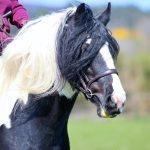
Piebald is also commonly seen in horses as “pinto” or “paint.” Paint horses like Tobiano, Overo, and Sabino can have various piebald patterns. In cats, the piebald pattern is often seen in breeds such as the Japanese Bobtail and the Turkish Van.
Birds can also exhibit piebald patterns, such as the Pied Crow, which has white feathers on its head and neck. Snakes can also display piebald patterns, such as the Piebald Ball Python, which has a white and black or white and brown pattern.
In conclusion, piebald is a genetic trait that causes an animal to have unpigmented spots on a pigmented background of hair, feathers, or scales. Piebald is seen in various animals, including dogs, horses, cats, birds, and snakes. Examples of piebald animals include Dalmatians, paint horses, Japanese Bobtail cats, Pied Crows, and Piebald Ball Pythons.