
15 Dog Breeds That Bark the Most (and Why They Do It)

Jun
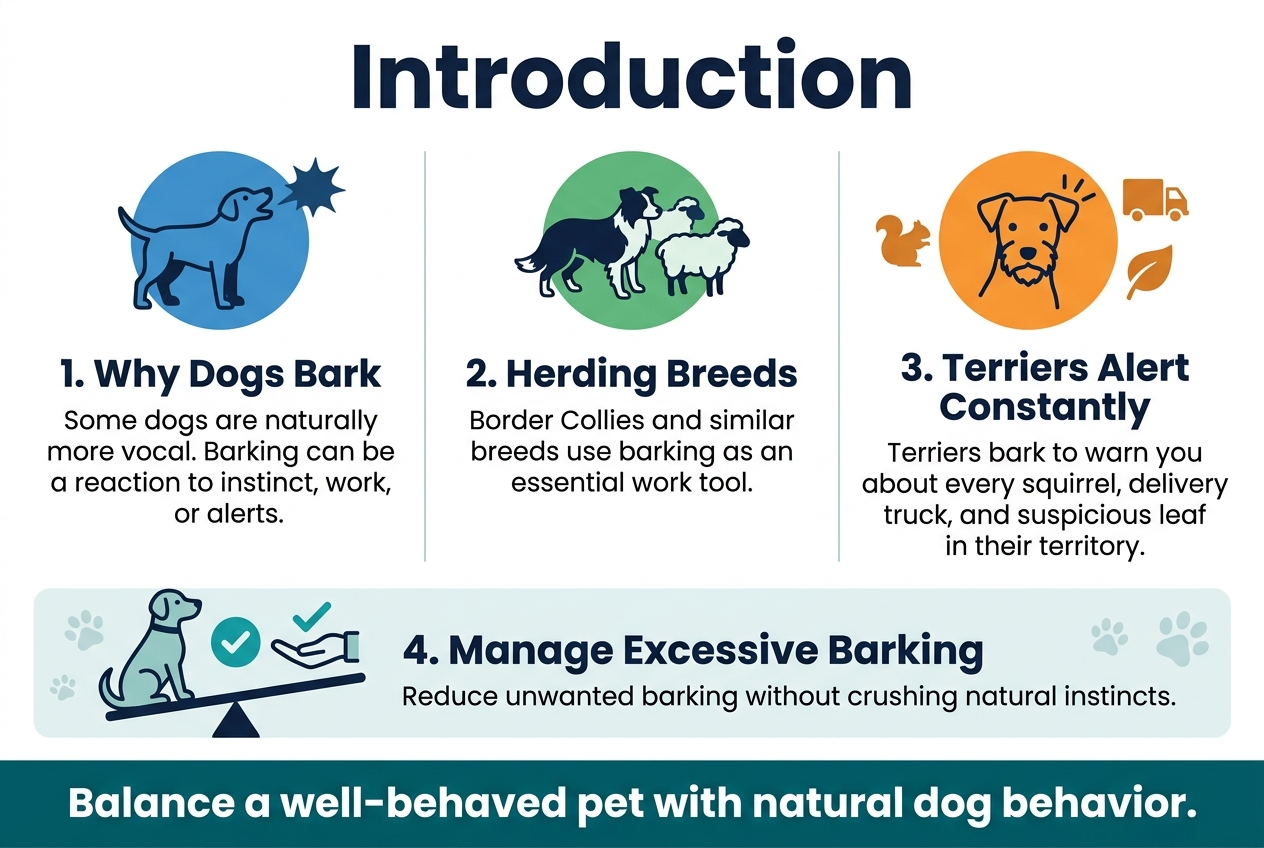
Some dog breeds that bark just can’t seem to keep quiet, and their constant barking can drive even the most patient dog lover crazy. This guide is perfect for prospective dog owners who want to know what they’re signing up for, current owners dealing with complaints from noisy neighbors, and anyone curious about why certain breeds are naturally more vocal than others.
Different dog breeds bark for completely different reasons – it’s not just about being loud for the sake of it. We’ll explore how herding breeds like Border Collies use barking as an essential tool of the trade, while terriers bark because they’re hardwired to alert you to every squirrel, delivery truck, and suspicious leaf that dares to enter their territory. You’ll also discover practical ways to manage excessive barking without crushing your dog’s instincts, helping you strike the right balance between a well-behaved pet and one that can still do what comes naturally.
Understanding Why Dogs Bark and What Triggers Excessive Barking
Instincts and communication methods in canines
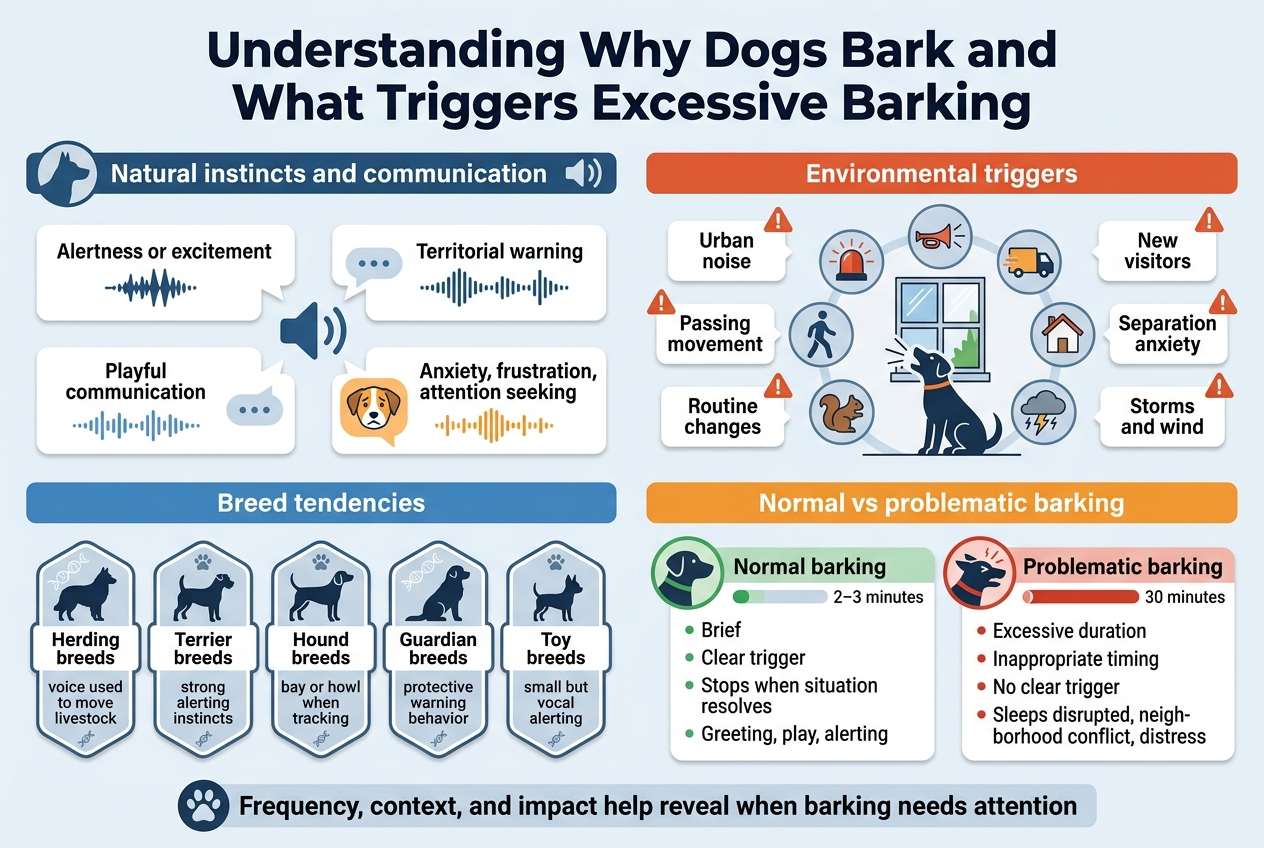
Barking serves as a dog’s primary means of vocal communication, deeply rooted in their evolutionary history as pack animals. Wild canines use vocalizations to coordinate hunts, warn of threats, and maintain social bonds within their groups. Domestic dogs have retained these instincts, adapting them to life alongside humans.
Dogs communicate through different types of barks that vary in pitch, duration, and intensity. A sharp, rapid bark typically signals alertness or excitement, while deeper, sustained barking often indicates territorial warnings. Playful barks sound lighter and more rhythmic, whereas anxious barking tends to be higher-pitched and repetitive.
Beyond basic communication, barking helps dogs express emotions they can’t convey through body language alone. When a dog feels frustrated, bored, or seeking attention, barking becomes their way of saying “notice me” or “I need something.” This vocal flexibility explains why some dogs seem to have different “voices” for different situations.
Environmental factors that stimulate barking behaviors
Modern living environments present countless triggers that can set off even the calmest dogs. Urban settings bombard dogs with constant stimuli: sirens, car horns, delivery trucks, and pedestrians passing by windows. Each sound can trigger a dog’s natural alerting instincts, especially when they can’t see its source.
Visual triggers play an equally important role. Dogs stationed near windows or glass doors often bark at passing joggers, other dogs, squirrels, or delivery personnel. The frustration with the barrier that prevents them from investigating these stimuli intensifies their vocal responses.
Changes in routine or environment can also increase the frequency of barking. Moving to a new home, construction noise, unfamiliar visitors, or even rearranged furniture can make dogs feel unsettled and more likely to bark. Weather changes, particularly thunderstorms or high winds, create additional environmental stressors that prompt vocal reactions.
Social isolation compounds these environmental factors. Dogs left alone for extended periods often develop separation anxiety, leading to excessive barking as they attempt to call their family back or express their distress.
Genetic predispositions in certain Dog Breeds That Bark
Selective breeding has amplified specific traits in different dog breeds, including their tendency to vocalize. Herding breeds like Border Collies and Australian Shepherds were bred to use their voices to move livestock, making them naturally more vocal than other breeds.
Terrier breeds carry genetic programming for pest control and property protection. Their DNA includes strong alerting instincts that make them quick to sound alarms at the slightest hint of a threat, no matter how small. This genetic wiring explains why a Jack Russell Terrier might bark at a leaf falling in the yard.
Hound breeds possess genetic traits for tracking and announcing their discoveries. Beagles, Bloodhounds, and Basset Hounds were selectively bred to “bay” or howl when they found scent trails, making vocalization an integral part of their hunting toolkit.
Guardian breeds like German Shepherds and Rottweilers inherit protective instincts that include using their voices to deter threats. Even toy breeds like Chihuahuas carry genetic predispositions for alerting, despite their small size making them unlikely physical protectors.
Difference between normal and problematic barking patterns
Normal barking serves appropriate purposes and occurs at reasonable times and durations. A dog barking briefly when someone approaches the house, during play, or when greeting family members falls within healthy behavioral ranges. These barks have clear triggers and stop when the situation resolves.
Problematic barking patterns involve excessive duration, inappropriate timing, or lack of clear triggers. Dogs that bark continuously for hours, start barking at 3 AM without apparent cause, or bark at every minor sound or movement display concerning patterns.
Frequency and context help distinguish between normal and excessive barking. A dog barking for 2-3 minutes when strangers approach, versus barking for 30 minutes after they leave, illustrates the difference between appropriate alerting and compulsive behavior.
The impact on daily life provides another measurement tool. When barking prevents family members from sleeping, creates neighborhood conflicts, or causes the dog obvious distress, it has crossed from normal communication into problematic territory that requires intervention.
Herding Breeds That Use Their Voice as a Working Tool
Border Collie’s Instinctive Need to Control and Communicate
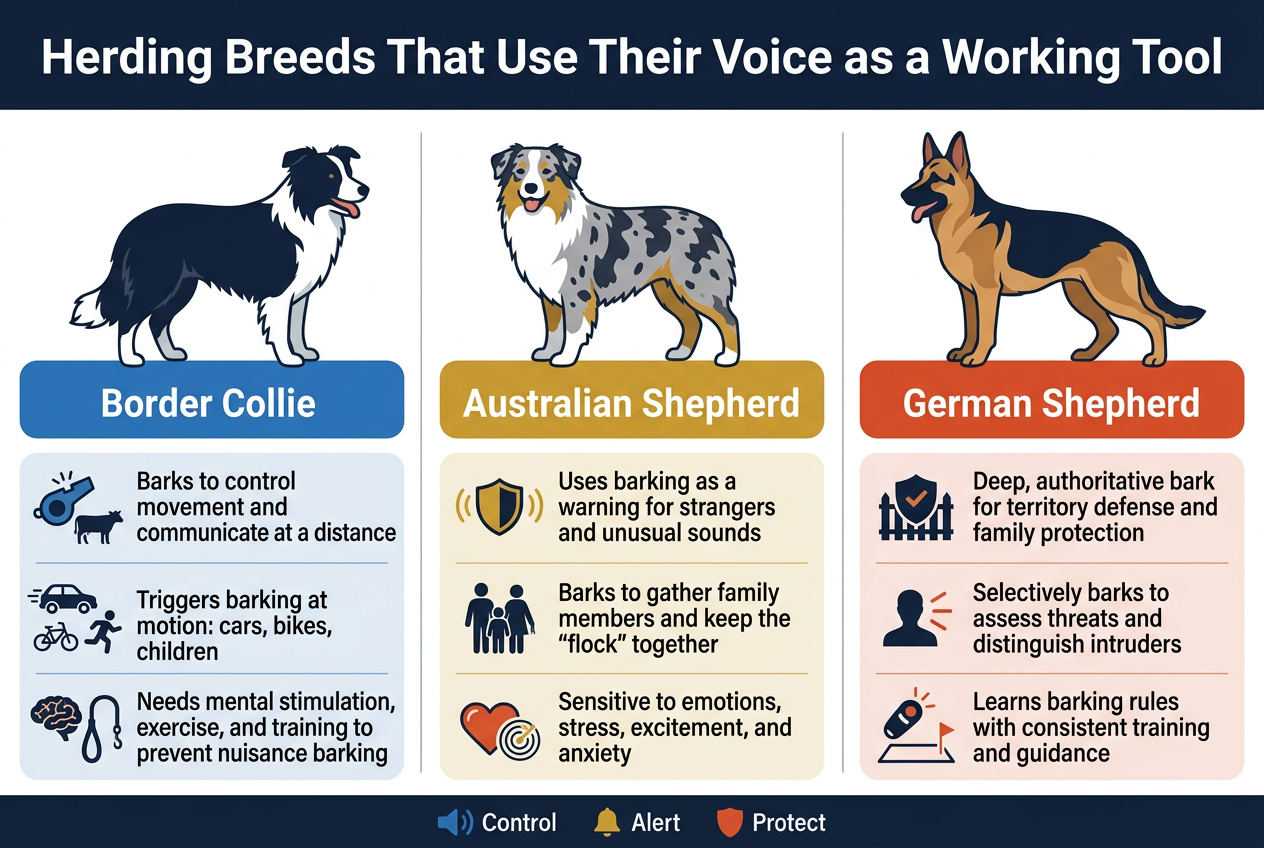
Border Collies rank among the most vocal herding breeds, and their barking serves a specific purpose rooted in centuries of selective breeding. These dogs were developed to work independently with livestock, often at great distances from their handlers. Their bark became an essential communication tool, allowing them to signal their location, alert handlers to problems, and control stubborn sheep or cattle.
When a Border Collie barks at moving objects like cars, bicycles, or running children, it’s displaying their hardwired herding instincts. They see anything in motion as needing to be controlled and organized. This behavior intensifies when they lack adequate mental stimulation or physical exercise, leading to excessive barking at everyday activities.
The breed’s intelligence works against quiet households. Border Collies quickly learn that barking gets attention, opens doors, or stops unwanted activities. They’ll bark to demand walks, playtime, or interaction. Without proper training and outlets for their energy, they can become nuisance barkers who vocalize their frustration throughout the day.
Australian Shepherd’s Protective Nature and Vocal Alerts
Australian Shepherds combine their herding heritage with strong protective instincts, making them naturally vocal dogs. Unlike Border Collies, who primarily bark to control movement, Aussies bark to warn their family about potential threats and changes in their environment.
These dogs form incredibly strong bonds with their families and consider themselves responsible for everyone’s safety. They’ll bark at strangers approaching the property, unusual sounds, and anything they perceive as out of place. Their alert barking often starts as a single sharp bark that escalates into sustained barking if they feel the threat persists.
Australian Shepherds also use their voice to gather and move their “flock” – which often includes family members, especially children. They might bark to get everyone moving in the same direction during walks or to call family members back together when someone wanders off.
The breed’s sensitivity to their owner’s emotions means they’ll often bark in response to stress, excitement, or anxiety in the household. They pick up on subtle cues and will vocalize when they sense something isn’t right, even if no obvious threat exists.
German Shepherd’s Guardian Instincts and Territorial Warnings
German Shepherds possess one of the most distinctive barks in the dog world – deep, authoritative, and unmistakably serious. Their barking serves multiple purposes: territory defense, threat assessment, and family protection. Unlike many breeds that bark indiscriminately, German Shepherds tend to be more selective in their barking, making their vocalizations particularly meaningful.
These dogs excel at reading situations and adjusting their barking accordingly. A German Shepherd might give a single warning bark to alert their family about a visitor, then escalate to more intense barking if they perceive the person as threatening. They can distinguish between family members returning home and genuine intruders, rarely wasting energy on false alarms.
Their territorial instincts run deep, and they consider their entire property – including yards, cars, and sometimes even the street in front of their home – as their domain to protect. German Shepherds will bark to establish boundaries and warn potential threats to stay away. This behavior often peaks during adolescence and early adulthood when their protective instincts fully develop.
Training plays a crucial role with German Shepherds because their natural intelligence allows them to learn complex barking rules. They can be taught when barking is appropriate and when silence is required, but they need consistent guidance to channel their protective instincts appropriately.
Terrier Breeds Born to Alert and Protect Their Territory
Jack Russell Terrier’s High Energy and Hunting Drive
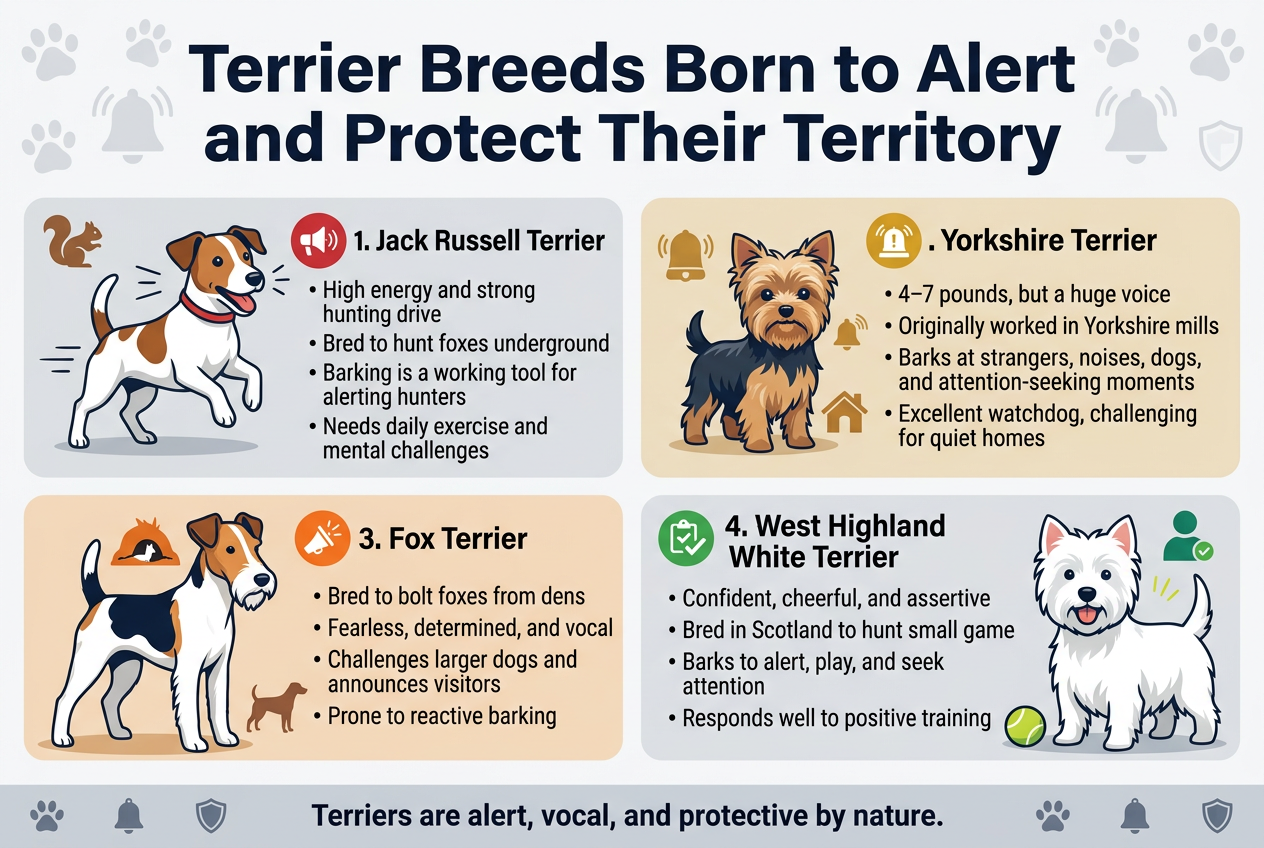
Jack Russell Terriers pack an incredible amount of energy and determination into their compact frames. Originally bred to hunt foxes in England, these dogs were specifically selected for their ability to follow prey underground and alert hunters with their distinctive bark. This hunting heritage means they’re naturally vocal dogs who use their voice as an essential working tool.
Their barking often stems from their high prey drive and need for mental stimulation. When a Jack Russell spots a squirrel, hears an unusual noise, or gets bored, they’ll voice their excitement or concern loudly and persistently. These dogs require significant daily exercise and mental stimulation to prevent excessive barking caused by pent-up energy.
Yorkshire Terrier’s Big Personality in a Small Package
Don’t let their tiny size fool you – Yorkshire Terriers have the heart and voice of a much larger dog. Weighing just 4-7 pounds, these little dynamos bark with surprising volume and frequency. They were originally working dogs in Yorkshire mills, where their job was to catch rats and alert workers to intruders.
Yorkies tend to bark at everything: strangers approaching the door, other dogs passing by, unfamiliar sounds, or even when they want attention from their owners. Their protective instincts run deep, and they genuinely believe they’re fierce guardians despite their toy breed classification. This makes them excellent watchdogs but challenging for noise-sensitive households.
Fox Terrier’s Bold Nature and Fearless Attitude
Fox Terriers, whether smooth or wire-haired, embody the classic terrier temperament of fearlessness and determination. These dogs were bred to bolt foxes from their dens, requiring courage, persistence, and a loud voice to communicate with hunters above ground. This working background created dogs with strong opinions and the vocal skills to express them.
Their barking often reflects their bold nature – they’ll challenge much larger dogs, announce every visitor, and voice their displeasure when things don’t go their way. Fox Terriers are particularly prone to “reactive” barking when they encounter other dogs or unexpected situations, as their instinct is to meet challenges head-on rather than retreat.
West Highland White Terrier’s Confident and Vocal Temperament
West Highland White Terriers combine a cheerful disposition with typical terrier assertiveness, creating dogs that bark both from joy and determination. Originally bred in Scotland to hunt small game, these white terriers needed to be tough enough to work independently and vocal enough to help hunters locate them in rough terrain.
Westies bark to express excitement, alert their families to visitors, and sometimes just because they enjoy the sound of their own voice. Their confidence means they rarely back down from a barking match with other dogs, and their social nature means they often bark to initiate play or get attention. These dogs respond well to positive training methods that redirect their vocal energy into more appropriate channels.
Hound Breeds That Follow Their Nose and Voice Their Discoveries
Beagle’s Tracking Instincts and Pack Communication
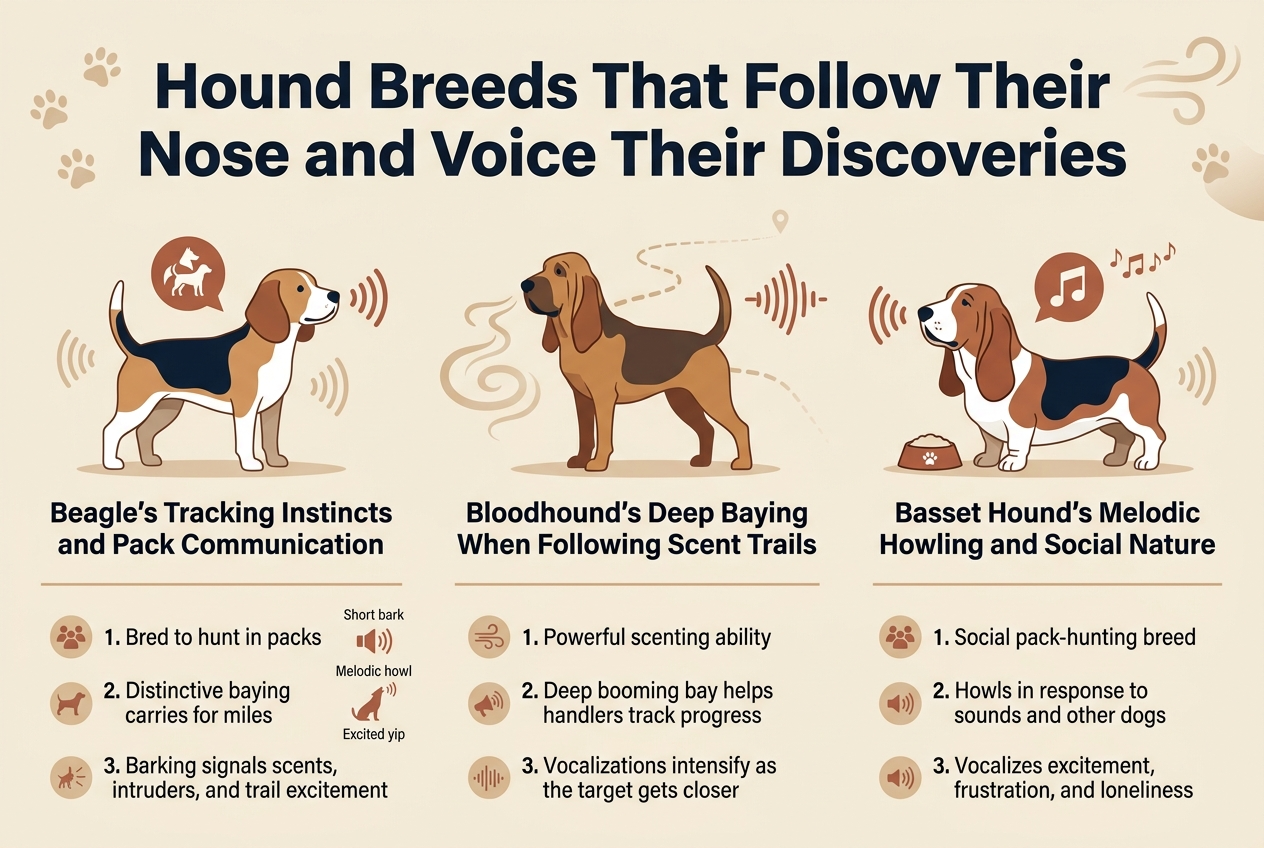
Beagles were bred specifically to hunt in packs, which explains their incredibly vocal nature. These compact hounds possess an almost irrepressible need to announce their findings to everyone within earshot. When a Beagle picks up an interesting scent, their excitement bubbles over into a distinctive baying that can carry for miles.
Their barking serves multiple purposes beyond simple excitement. Beagles use different vocalizations to communicate with their human family and alert them to potential intruders, interesting smells, or anything that seems out of place in their territory. Their pack mentality means they feel responsible for keeping everyone informed about what’s happening around them.
The Beagle’s bark varies depending on the situation. You’ll hear short, sharp barks when they spot something suspicious, melodic howling when they’re calling to other dogs, and excited yipping when they’re following a particularly enticing scent trail. Many Beagle owners quickly learn to distinguish between these different vocal patterns.
Bloodhound’s Deep Baying When Following Scent Trails
Bloodhounds possess perhaps the most powerful scenting ability of any dog breed, and their deep, resonant baying reflects this incredible talent. When a Bloodhound locks onto a scent trail, their distinctive voice becomes an essential tool for tracking work. The low, booming bay carries across great distances, allowing handlers to follow their progress even when the dog disappears.
This breed’s vocalizations are deeply ingrained in their working heritage. Bloodhounds were developed to track game and later humans across challenging terrain, often working independently while maintaining contact with their handlers through their powerful voice. Their baying intensifies as they get closer to their target, creating an audible map of the trail’s strength.
The Bloodhound’s vocal habits don’t disappear when they’re off duty. These gentle giants often bay at interesting smells during regular walks, express excitement when greeting family members, or announce visitors with their unmistakable deep voice. Their size and lung capacity mean their vocalizations can be quite impressive, especially in enclosed spaces.
Basset Hound’s Melodic Howling and Social Nature
Basset Hounds are natural entertainers with a voice that’s both charming and persistent. These low-slung hounds were bred for pack hunting, and their social nature drives much of their vocal behavior. Basset Hounds rarely bark to hear themselves talk – they’re usually trying to communicate something important or connect with their family.
Their howling often starts in response to certain sounds, such as sirens, musical instruments, or other dogs singing along. Once one Basset starts howling, others frequently join in, creating a chorus that neighbors won’t soon forget. This behavior stems from their pack instincts and their desire to participate in group activities.
Basset Hounds also use their voice to express frustration, especially when they detect interesting scents but can’t follow them. Their melodic barks and howls can indicate boredom, loneliness, or excitement about dinner time. Many owners find their Basset’s vocalizations endearing, though the volume and persistence can become challenging without proper training and mental stimulation.
Toy and Companion Breeds That Guard Despite Their Size
Chihuahua’s Fierce Loyalty and Protective Instincts
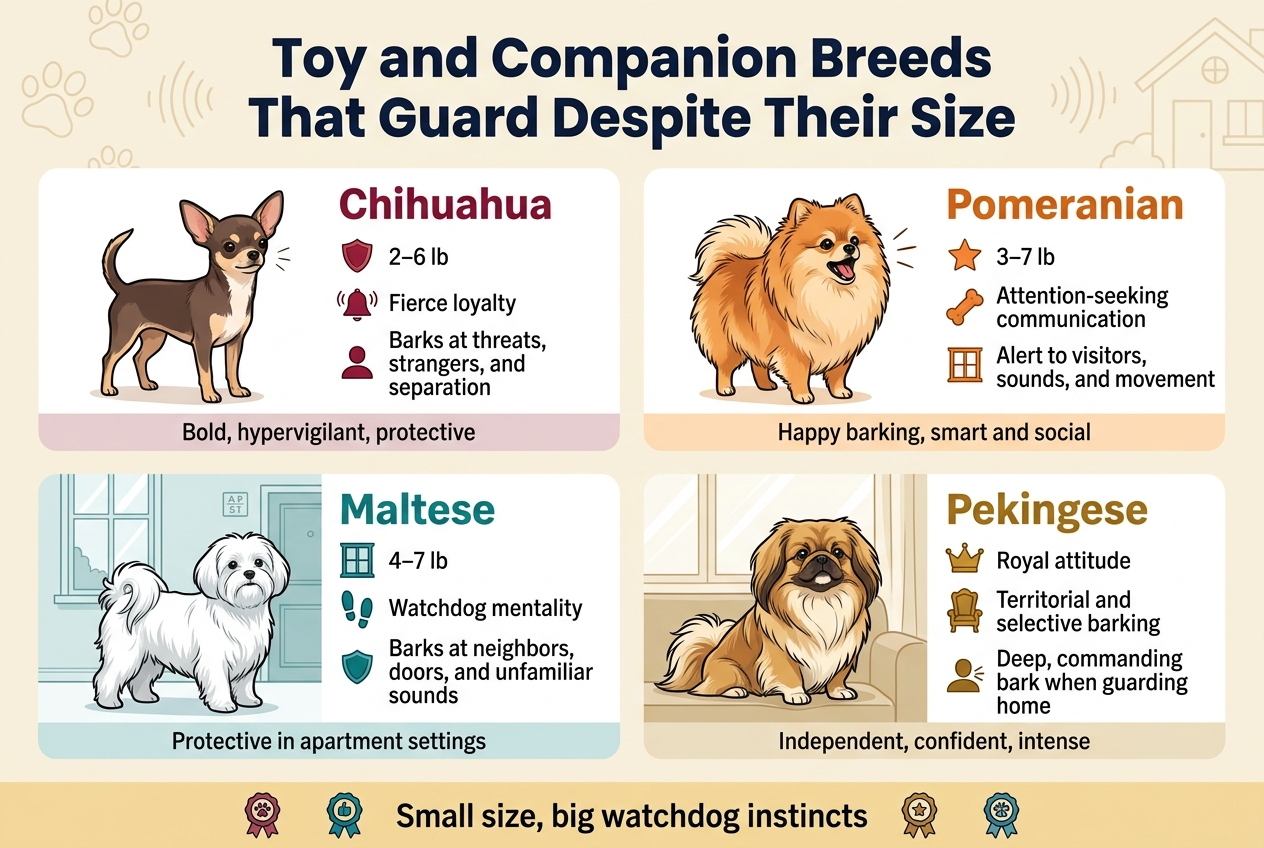
Chihuahuas pack a massive personality into their tiny 2-6 pound frame, and their barking reflects this bold attitude. These pint-sized guardians genuinely believe they’re much larger than they actually are, leading to frequent vocal displays whenever they perceive threats to their territory or family members. Their barking often stems from their incredibly strong bond with one particular person in the household, whom they’ll defend with surprising intensity.
Their alert nature means Chihuahuas notice everything – from delivery trucks three blocks away to unfamiliar shadows moving past windows. This hypervigilance translates into frequent barking episodes that can catch neighbors off guard with their startling loudness. Many Chihuahua owners report that their dogs bark at specific triggers, such as doorbell sounds, knocking, or even footsteps in apartment hallways above them.
The breed’s barking also serves as a form of attention-seeking, especially when they want interaction with their favorite human. Chihuahuas are notorious for developing separation anxiety, which manifests through excessive barking when left alone. Their protective instincts run so deep that some Chihuahuas will bark preemptively at situations they perceive as threatening, making them excellent early warning systems but challenging companions in noise-sensitive environments.
Pomeranian’s Alert Nature and Attention-Seeking Behavior
Pomeranians descended from larger spitz breeds used for sledding and herding, which explains their vocal tendencies and alert disposition. Despite their fluffy, teddy-bear appearance, these 3- to 7-pound dogs retain the working instincts of their ancestors, expressing themselves through frequent barking. Their high-pitched, sharp bark can be surprisingly penetrating and persistent, especially when they’re excited or seeking attention.
These dogs thrive on being the center of their family’s universe and often use barking as their primary means of communication. Pomeranians bark to announce visitors, express excitement during playtime, demand treats or attention, and even to “talk” back during conversations with their owners. Their social nature means they genuinely want to participate in family activities, and barking becomes their way of joining the conversation.
Weather changes, unusual sounds, and movement outside windows trigger their alert responses, leading to bark sessions that can last several minutes. Pomeranians also exhibit what many owners call “happy barking” – enthusiastic vocalizations when their favorite people come home or during feeding time. Their intelligence means they quickly learn which barking patterns get them what they want, whether that’s attention, treats, or access to different areas of the house.
Maltese’s Watchdog Mentality in Apartment Settings
The Maltese breed combines elegant beauty with a surprisingly robust watchdog instinct that manifests through strategic barking. These 4-7 pound companions take their guardian duties seriously, despite their silky white coats and gentle appearance. In apartment settings, Maltese dogs become particularly vocal because they can hear activities from neighboring units, hallway traffic, and building maintenance sounds that trigger their protective responses.
Their barking patterns often center around territorial protection of their living space and family members. Maltese dogs position themselves near windows, doors, or other vantage points to monitor their surroundings and bark warnings about approaching strangers or unusual activity. Their keen hearing picks up subtle sounds that humans miss, leading to seemingly random barking episodes that actually respond to legitimate environmental changes.
Unlike some toy breeds that bark mainly for attention, Maltese dogs bark with purpose and discrimination. They typically differentiate between family members and strangers, barking more intensely at unfamiliar people while offering gentler vocal greetings to familiar faces. In multi-story living situations, these dogs often bark at elevator sounds, door slamming, and footsteps in stairwells, viewing these noises as potential intrusions into their protected territory.
Pekingese’s Regal Attitude and Territorial Tendencies
Pekingese dogs carry themselves with an air of aristocracy that directly influences their barking behaviors and territorial responses. Originally bred as companions for Chinese royalty, these dogs maintain an inherent sense of dignity and ownership that manifests in selective yet intense episodes of barking. Their flat faces and compact bodies don’t diminish their vocal capabilities or their determination to announce threats to their domain.
Their territorial nature means Pekingese dogs view their home environment as their personal palace, which they must protect through vigilant monitoring and strategic barking. They often position themselves in elevated spots, such as furniture or window sills, surveying their surroundings with the seriousness of palace guards. When they identify potential intruders or unusual activities, their barking becomes deep and commanding, reflecting their confident personalities.
Pekingese dogs also bark to establish social hierarchies within their households, especially when interacting with other pets or unfamiliar people. Their independent nature means they bark on their own terms rather than seeking constant attention, making their vocal displays more purposeful and less frequent than those of some other toy breeds. However, when they do bark, the intensity and persistence can surprise people who expect quieter behavior from their compact size and somewhat sedentary lifestyle.
Working and Guardian Breeds That Take Protection Seriously
Rottweiler’s natural guarding instincts and family protection
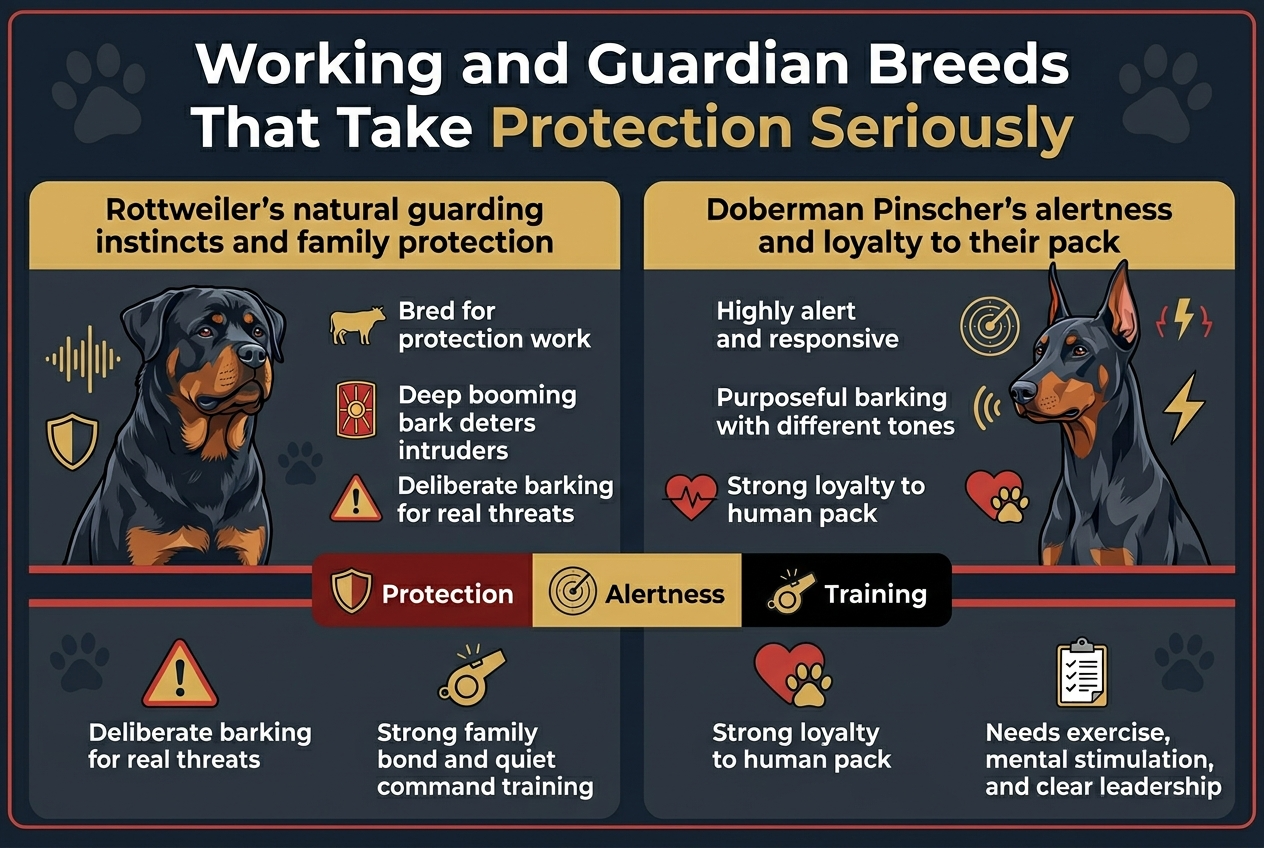
Rottweilers have earned their reputation as one of the most vocal guardian breeds through centuries of selective breeding for protection work. These powerful dogs were originally bred to drive cattle and guard the Roman legions’ money pouches, a role that required both courage and the ability to intimidate with imposing barks. Their deep, booming voice serves as their first line of defense, often deterring intruders before physical confrontation becomes necessary.
When a Rottweiler barks, it’s usually responding to genuine threats or territorial intrusions. Their barking patterns tend to be deliberate and measured rather than frantic, reflecting their confident and calculating nature. These dogs possess an exceptional ability to differentiate between normal household activity and potential dangers, making their alerts particularly meaningful.
The breed’s strong family bonds amplify their protective barking. Rottweilers view their human family as their pack, and they take this responsibility seriously. They’ll bark to alert family members about visitors, unusual sounds, or anything they perceive as potentially threatening their loved ones. This protective instinct is so deeply ingrained that even well-socialized Rottweilers will remain alert throughout their lives.
Training plays a crucial role in managing a Rottweiler’s barking. These intelligent dogs respond well to consistent boundaries and clear commands. Teaching them specific “quiet” commands and rewarding appropriate barking while discouraging excessive noise helps channel their protective instincts constructively.
Doberman Pinschers’ alertness and loyalty to their pack
Doberman Pinschers rank among the most alert and responsive guardian breeds, with barking as their primary means of communication for pack protection. Originally developed in Germany during the 1890s for personal protection, these dogs possess an almost supernatural awareness of their surroundings. Their keen senses detect subtle changes in their environment, prompting immediate vocal responses to potential threats.
The Doberman’s barking style reflects its high intelligence and emotional sensitivity. They bark with purpose, using different tones and intensities to communicate various messages. A sharp, rapid bark might indicate immediate danger, while a lower, more sustained bark could signal general alertness or uncertainty about a situation. This nuanced communication system makes them excellent guard dogs but can also lead to frequent vocalization.
Their intense loyalty to their human pack drives much of their barking behavior. Dobermans form extraordinarily strong bonds with their families and consider protecting them their primary mission in life. They’ll bark to announce arrivals, warn of suspicious activity, or communicate their emotional state to their beloved humans. This emotional connection means they often bark when separated from their pack and experience genuine distress when left alone.
Managing a Doberman’s barking requires understanding their need for mental stimulation and clear leadership. These dogs thrive with consistent training, regular exercise, and jobs to do. Providing them with appropriate outlets for their protective instincts, such as supervised guard duties or advanced obedience training, helps satisfy their working drive while controlling excessive barking.
Practical Strategies to Manage and Reduce Excessive Barking
Training techniques that redirect vocal energy positively
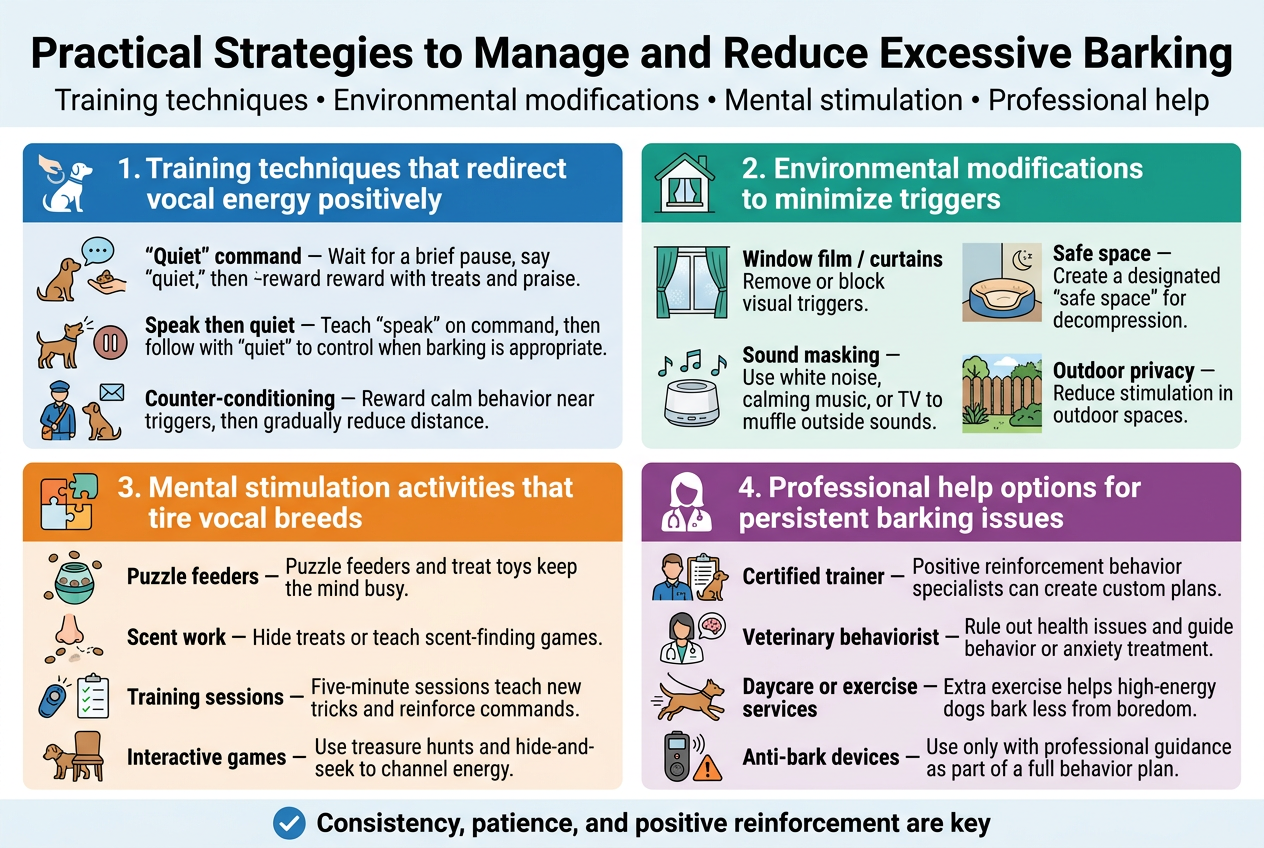
Start with the “quiet” command by catching your dog during a barking episode. Wait for a brief pause in their barking, immediately say “quiet,” and reward with treats and praise. Consistency is key – practice this daily until your dog associates the command with stopping their vocal outburst.
Redirect barking energy through controlled barking exercises. Teach your dog to “speak” on command first, then follow with “quiet.” This gives you control over when barking is appropriate and when it should stop. Many vocal breeds respond well to having a job, so channel their alertness into useful behaviors like alerting you to visitors but stopping when asked.
Counter-conditioning works especially well for trigger-based barking. If your dog barks at the mailman, start by rewarding calm behavior when they see postal workers from a distance. Gradually decrease the distance while maintaining the calm, rewarded behavior. This rewires their response from “bark at threat” to “look at owner for treats.”
Environmental modifications to minimize triggers
Remove or block visual triggers that set off barking sprees. Window film, strategic furniture placement, or closing curtains during peak trigger times can dramatically reduce reactive barking. For dogs who bark at passersby, consider moving their favorite resting spots away from street-facing windows.
Create a designated “safe space” where your dog can retreat when overwhelmed. This might be a cozy corner with their bed, away from the action. Some dogs bark less when they have a quiet zone to decompress.
Sound masking helps muffle outside noises that trigger barking. White noise machines, calming music designed for dogs, or even leaving the TV on can reduce their awareness of external sounds. Background noise is particularly effective for dogs who bark at every footstep or car door.
Modify outdoor spaces by installing privacy screens or moving your dog’s outdoor time to quieter parts of your yard. If your dog barks at neighbors, chain-link fencing, solid panels, or strategic landscaping can eliminate the visual stimulation.
Mental stimulation activities that tire vocal breeds
Puzzle feeders and treat-dispensing toys engage your dog’s mind while keeping their mouth busy. A tired brain often means a quieter dog. Rotate different puzzle types weekly to maintain interest and challenge levels.
Scent work taps into your dog’s natural abilities while providing mental exhaustion. Hide treats around the house or teach your dog to find specific scented objects. This activity is particularly effective for hounds and other scent-driven breeds.
Training sessions that teach new tricks or reinforce existing commands provide mental stimulation while strengthening your bond. Even five-minute sessions can tire out a vocal dog’s mind. Focus on commands that require concentration, like “wait,” “leave it,” or complex trick sequences.
Interactive games like hide-and-seek or treasure hunts keep clever, vocal breeds engaged. These activities channel their intelligence and energy into positive outlets rather than excessive barking.
Professional help options for persistent barking issues
Certified dog trainers who specialize in behavioral modification can assess your specific situation and create customized training plans. Look for trainers who use positive reinforcement methods and have experience with your dog’s breed group.
Veterinary behaviorists offer medical and behavioral expertise for severe barking problems. They can rule out underlying health issues that might contribute to excessive vocalization and prescribe behavior modification protocols or anxiety medications when necessary.
Professional dog daycare or exercise services can help tire out high-energy vocal breeds when you’re unable to provide adequate stimulation. A well-exercised dog typically barks less from boredom or pent-up energy.
Anti-bark training devices, when used correctly under professional guidance, can supplement training efforts. However, these should never be the sole solution and are most effective as part of a comprehensive behavior modification program that addresses the root causes of excessive barking.
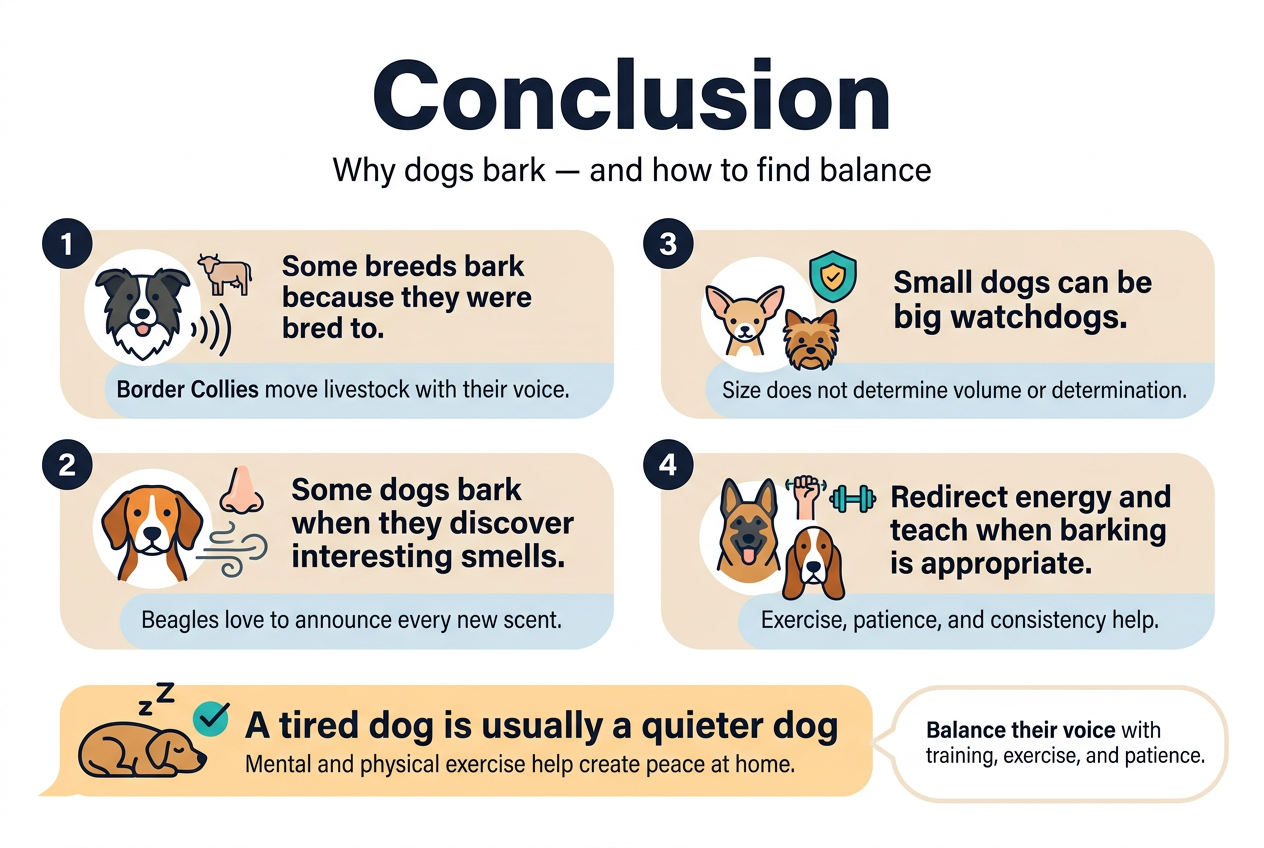
Some dogs can’t help themselves when it comes to barking – it’s literally what they were bred to do. From Border Collies using their voice to move livestock to Beagles announcing every interesting scent they discover, each breed has its own reasons for being vocal. Even tiny Chihuahuas and Yorkshire Terriers take their guard dog duties seriously, proving that size doesn’t determine volume or determination.
The good news is that understanding why your dog barks is the first step to finding peace in your home. While you can’t completely change your German Shepherd’s protective instincts or stop your Basset Hound from celebrating every interesting scent, you can redirect their energy and teach them when it is appropriate to bark. Remember, a tired dog is usually a quieter dog, so make sure your furry friend gets plenty of mental and physical exercise. With patience, consistency, and the right training approach, you and your vocal companion can find the perfect balance between letting them be themselves and maintaining your sanity.