
Apr
Fawn
The Color Fawn: A Delicate Hue with Versatile Applications
Fawn, a light yellowish-tan color, has captured the attention of artists, designers, and dog enthusiasts alike. This delicate hue is applied in various domains, including clothing, soft furnishings, bedding, and even in describing certain dog coat colors. With its range of shades, from pale tan to pale fawn and even dark deer-red, Fawn offers a versatile and appealing option for those seeking a warm, understated tone.
Originating in fashion and design, the color fawn has become popular for creating a soothing, cozy atmosphere. Its gentle and neutral undertones make it ideal for complementing a wide range of color palettes, allowing it to harmonize with vibrant and muted shades.
The hex triplet #E5AA70 represents fawn in the sRGB color space, with RGB values (229, 170, 112), a hue of 30 degrees, a saturation of 51%, and a value of 90% in the HSV color model.
Interestingly, Fawn is not solely confined to the worlds of fashion, interior décor, and visual design. Beyond its use as a soft, warm, and naturally appealing color description, it also has an important place in the terminology used to describe coat colors among various dog breeds.
In canine coat descriptions, fawn typically refers to a shade that ranges from a pale cream or light tan to a richer golden-brown, and in some cases, a deeper deer-red tone. This variation gives the color its distinctive charm, as it can appear subtle and delicate in one breed while looking bold and striking in another.
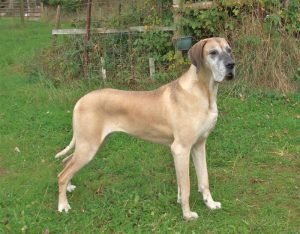
The fawn coat color is especially well known in breeds such as Boxers, Great Danes, Pugs, and Puggles, where it is often considered one of the most recognizable and admired shades. In Boxers, for example, fawn may appear with a black mask, creating a strong and expressive facial contrast.
Great Danes can display an elegant fawn coat that highlights their impressive size and graceful build. Pugs commonly feature fawn coloring paired with dark ears and facial markings, contributing to their classic and much-loved appearance.
Puggles, being a crossbreed, may inherit a range of fawn tones that reflect the coloring of both parent breeds. Overall, the use of “fawn” in dog coat terminology demonstrates how this gentle, earthy color extends well beyond aesthetics, becoming a meaningful descriptor in the appreciation and identification of many beloved canine companions.
Genetically, this color is often attributed to the recessive ay gene at the Agouti locus. Additionally, certain breeds, like Chows and Doberman Pinschers, utilize the term “fawn” to describe a red dog with a copy of the dilution gene at the Eumelanin locus. However, Dobermans commonly call this color “Isabella”.
The term “fawn” as a color name has been recorded in English since 1789, demonstrating its long-standing presence in both our language and our visual culture. Drawn from the soft, warm coloring associated with a young deer, the word naturally suggests gentleness, subtle beauty, and an understated connection to the natural world. Its meaning has remained remarkably consistent over time, generally referring to a light yellowish-brown, tan, or muted beige shade that feels calm, earthy, and approachable.
Over the years, fawn has retained its popularity for its versatility and ability to evoke warmth, tranquility, and quiet elegance. Unlike bolder or more dramatic colors, fawn does not demand attention; instead, it creates a sense of balance and comfort. This makes it especially valuable in fashion, where fawn-colored garments can appear refined, timeless, and easy to pair with other hues. Coats, sweaters, shoes, handbags, and tailored pieces in fawn often convey a polished yet natural style, suitable for both casual and formal settings.
In interior design, fawn is equally admired for its soothing qualities. Used on walls, upholstery, rugs, or decorative accents, it can make a space feel inviting without overwhelming it. Because it blends beautifully with creams, whites, browns, greens, and muted blues, fawn often serves as a dependable neutral that adds warmth while preserving a peaceful atmosphere.
The color also remains familiar in descriptions of animals, particularly beloved canine companions whose coats display soft tan or beige tones. In this context, fawn suggests both visual charm and affectionate familiarity. Whether adorning clothing, enriching home décor, or describing the striking coats of dogs and other animals, fawn continues to captivate and inspire with its graceful simplicity and enduring appeal.
Fawn’s light yellowish tan hue lends itself well to various applications, from fashion and design to describing coat colors in specific dog breeds. With its versatility and ability to complement a range of colors, fawn has established itself as an enduring and beloved choice.
Whether you seek to create a serene ambiance or appreciate the beauty of fawn-coated dogs, this delicate and inviting color never fails to make a lasting impression.
