Apr
AKC Groups, Working Group
Giant Schnauzer: More Than Just Another Big Dog
Giant Schnauzer History
The name Schnauzer comes from the German word Schnauze, meaning “snout”. Giant Schnauzers were developed from the Standard Schnauzer. They were used for driving cattle in the Bavarian Alps. Although the Miniature, Standard, and Giant Schnauzer look similar, they are separate breeds. Unlike the Poodles, they are not different sizes of the same breed. Although no breed standards were established until 1923, Giant Schnauzers had been known as far back as 1832. They have also been used as guard dogs by the police and military, and are better known as working dogs than pampered pets.
Description
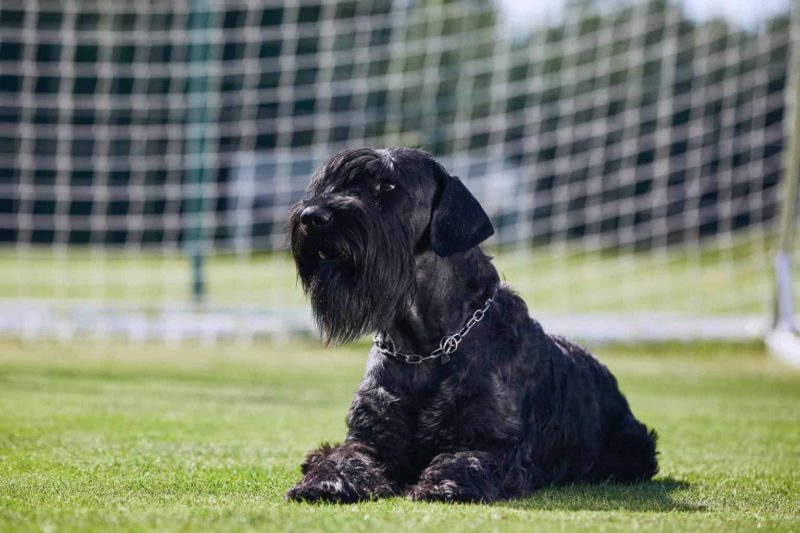
The Giant Schnauzer is a big dog, standing about 23 to 28 inches tall and weighing 55 to 80 lbs. They can be black or salt-and-pepper, but their faces should always be dark. The Giant Schnauzer is more than just another big dog.
They also participate in various dog sports and are often used in military and police work. They are easily recognized by the unique way their faces are trimmed. They have long eyebrows and a full beard. They have a square appearance.
Their bodies are as long as they are tall. Their eyes are small and round and set close together, and their ears are small and fold over. However, in some countries, their ears are cropped, making them pointy and standing upright. They have long, thick, powerful legs, and their front legs should be straight. The Giant Schnauzer was developed by crossing the Standard Schnauzer, the Bouvier des Flandres, and the black Great Dane.
Giant Schnauzers as Family Pets
The Giant Schnauzer is not suited for apartment life. They are highly active and need plenty of space to get enough exercise. They would do best with a family with no other pets and no very young kids, unless the dog is well-trained and properly socialized. They cannot be given enough exercise, so an active family that can take them out for hours of cycling or running would be best.
They are very affectionate and highly intelligent. However, they are prone to dominance, so they need an experienced owner who can maintain order and discipline. They are exceptionally energetic dogs and can become destructive if not exercised enough. They are known to be good with children and make good family pets.
They are brave, fun-loving, full of character, and will always be faithful. They need plenty of structure in their lives and should be socialized with people and animals from a young age.
However, when adequately trained, properly socialized, and given plenty of regular exercise, Giant Schnauzers can become wonderful, loyal pets and devoted family companions. They are intelligent, energetic dogs that need both physical activity and mental stimulation to stay balanced and well-behaved. With consistent guidance, clear boundaries, and positive reinforcement, they often form a strong bond with their owners and can be deeply protective of the people they love.
By nature, Giant Schnauzers are usually quiet, observant, and watchful rather than overly noisy or excitable. They are not the type of dog to bark without reason, but when they do speak up, it is often because they have noticed something unusual in their surroundings.
This calm but alert temperament makes them especially dependable in a home or working environment. Giant Schnauzers tend to be naturally suspicious of strangers and may take time to warm up to unfamiliar people, particularly if they feel their family or territory could be at risk.
They can also be highly territorial, often showing a strong instinct to protect their home, yard, and loved ones. These traits, combined with their confidence, physical strength, intelligence, and alertness, make them excellent guard dogs. However, their protective nature should be guided through consistent training and early socialization, so they learn to distinguish between real threats and normal everyday situations. With the right handling, a Giant Schnauzer can be both a loyal family companion and a courageous, reliable protector.
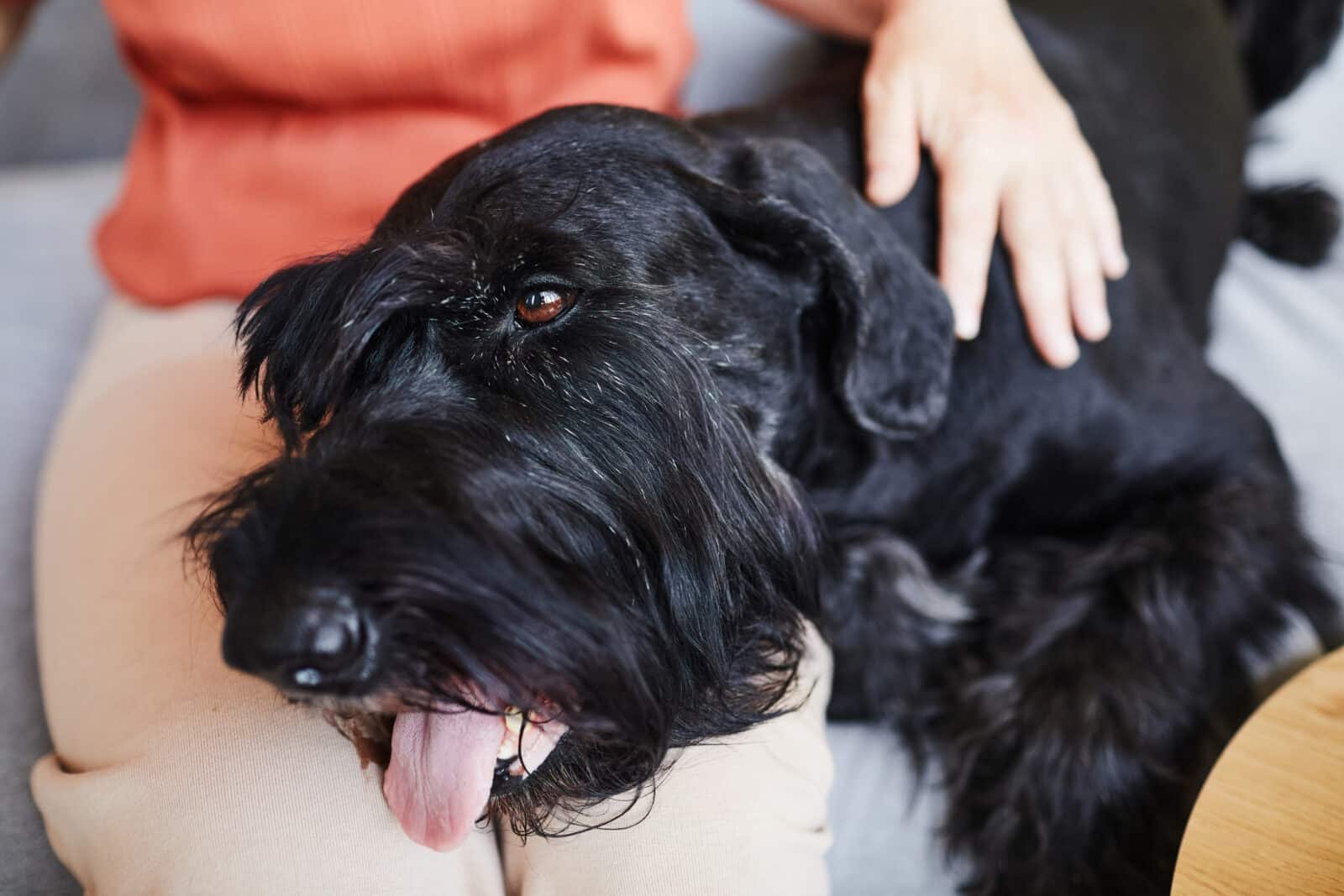
They are quick to notice unusual activity and will not hesitate to stand between their family and a perceived threat. For this reason, early socialization is especially important so they learn to distinguish between normal visitors and genuine danger.
Some Giant Schnauzer owners believe that the salt-and-pepper Giant Schnauzer may be more docile or even-tempered than the solid black variety. While this opinion is often based on personal experience rather than proven fact, temperament can vary from dog to dog depending on breeding, training, environment, and handling. In the right home, both color varieties can be affectionate, dependable, and impressive companions.
Grooming
Although they do not need much grooming and are relatively easy to keep, there are a few essential things to keep in mind. Because the Giant Schnauzer doesn’t shed, it’s important to regularly brush them to remove any dead undercoat, as left behind it can mat. Giant Schnauzers have dense, wiry coats that require regular brushing or clipping.
Most owners will find it more convenient to take their dog to a professional groomer to get a proper schnauzer cut. It’s also important to clean their faces after eating, as bits of food can get caught in their mustaches, causing discoloration.
Regular dental care is essential for maintaining overall health, as dental issues can lead to more serious problems. Daily tooth brushing is ideal, but dental chews can also help reduce plaque buildup. Socialization is crucial for these dogs, as it helps them develop a well-rounded personality and prevents behavioral issues. Training should start early, focusing on positive reinforcement to encourage good habits. With the right guidance, a Giant Schnauzer can become a well-behaved and loyal family member.
Health Concerns
The Giant Schnauzer is considered a healthy and sturdy breed overall, especially compared with many other large working dogs, but, like all breeds, it can be prone to certain inherited or breed-associated illnesses.
Some of the health concerns most commonly seen in Giant Schnauzers include hip dysplasia, epilepsy, urinary incontinence, bloat, and various forms of cancer. Hip dysplasia can affect mobility and comfort as the dog ages, while epilepsy may require long-term veterinary management if seizures occur.
Incontinence can sometimes be seen in adult or senior dogs, and bloat, also known as gastric dilatation-volvulus, is a serious emergency condition that deep-chested breeds may be more vulnerable to. Because cancer can also appear in the breed, regular veterinary checkups, early detection, and prompt treatment are important parts of responsible Giant Schnauzer care.
Their average life expectancy is 12–15 years, which is relatively long for a large dog breed. With proper nutrition, regular exercise, routine veterinary care, and responsible breeding practices, many Giant Schnauzers remain active, alert, and energetic well into their senior years.
Owners should also pay attention to weight management, as excess weight can place added stress on the joints and may worsen conditions such as hip dysplasia. Since this breed is intelligent, powerful, and active, maintaining both physical and mental health through training, structured activity, and social engagement is just as important as monitoring for medical concerns.
The Giant Schnauzer Club of America (GSCA) is the parent club of the AKC and plays an important role in preserving and promoting the breed. The GSCA maintains the official breed standards, provides educational resources, and offers a directory of people active in breeding. Prospective owners are encouraged to consult reputable breeders who follow health-testing recommendations and prioritize temperament, structure, and long-term well-being. Choosing a responsible breeder, asking about health clearances, and learning about the breed’s needs can help ensure that a Giant Schnauzer has the best possible start in life.
