
 Home
Home Store
StoreSpaying and Neutering

Aug
Spaying and neutering dogs are common in the United States and many other countries. This surgical procedure involves removing the reproductive organs of dogs, which can have health and behavioral benefits.
Over 80% of U.S. dogs are estimated to be spayed or neutered to control the pet population, decrease the risk of mammary and prostate cancer, and decrease unwanted behaviors such as aggression and roaming [1]. While there are potential risks associated with any surgical procedure, the benefits of spaying and neutering generally outweigh the risks.
Benefits of Spaying and Neutering
One of the main benefits of spaying female dogs is a decrease in the risk of mammary cancer, a common cancer in dogs that can be fatal. Spaying before the first heat cycle can decrease the risk of mammary cancer by up to 90%.
Neutering male dogs can decrease the risk of prostate cancer and other reproductive-related health issues. It can also decrease unwanted behaviors such as aggression, marking, and roaming, which can lead to injuries and accidents.
Control of Pet Population
Spaying and neutering can also help control the pet population by preventing unwanted litters and reducing the number of dogs in animal shelters. In addition, spaying and neutering can have financial benefits for dog owners, as the surgery costs are often lower than the costs of caring for a litter of puppies or treating reproductive-organ-related health issues.
While spaying and neutering are generally recommended for most dogs, there may be exceptions. Some dogs may have underlying health conditions that make the surgery risky, or may be used for breeding. In these cases, it is essential to consult with a veterinarian to determine the best course of action.
Spaying and neutering dogs is a common practice with many health and behavioral benefits. It can decrease cancer risk, reduce unwanted behaviors, and control the pet population. While there may be exceptions, spaying and neutering is generally recommended for most dogs. Owners should consult a veterinarian to determine the best course of action for their dog.
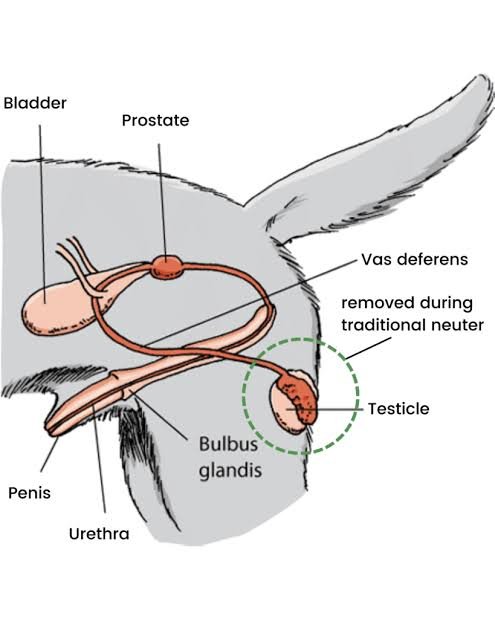
Traditional spaying and neutering are gonadectomies—meaning they completely remove the organs that produce sex hormones (the testicles in males, ovaries and uterus in females).
Alternative methods focus on hormone-sparing sterilization. They render the dog incapable of reproducing while preserving its natural hormones. This conversation has gained a lot of traction recently due to emerging research showing that sex hormones play an important role in a dog’s bone development, joint health, and overall endocrine balance.
The two main alternative options, alongside their distinct trade-offs, include:
1. Vasectomy (For Male Dogs)
Just like the human procedure, a canine vasectomy snips or blocks the vas deferens (the tubes that carry sperm from the testicles).
The Pros
- Joint and Growth Protection: Because the testicles are left intact, the dog continues to produce testosterone. This is highly beneficial for large and giant breeds, as testosterone helps properly close growth plates, drastically reducing the risk of hip dysplasia, torn crucial ligaments (ACLs), and certain bone cancers.
- Metabolic Health: Intact testosterone levels help maintain normal metabolism, making hormone-sparing dogs significantly less prone to post-neuter obesity.
The Cons
- Intact Behaviors Remain: Your dog will still have his full drive to find a mate. He may still lift his leg to mark territory, attempt to roam, or display humping and mating behaviors.
- Health Risks of Retained Testicles: He remains at risk for illnesses associated with testosterone and older age, such as testicular cancer and benign prostatic hyperplasia (an enlarged prostate).
- Daycare and Boarding Hurdles: Many facilities have a strict “no intact dogs” policy. Even though your dog is 100% sterile, his scent and behaviors are identical to an unneutered dog, which can trigger aggression from traditionally neutered males.
2. Ovary-Sparing Spay / OSS (For Female Dogs)
In an Ovary-Sparing Spay (also called a hysterectomy), the surgeon removes the entire uterus and cervix but leaves one or both ovaries behind.
The Pros of Spaying and Neutering
- Protects Against Major Health Issues: Natural estrogen helps protect females from several serious health conditions. OSS significantly reduces the risk of urinary incontinence (which affects up to 20% of traditionally spayed large female dogs), joint disorders, and aggressive hemangiosarcoma (a deadly blood vessel cancer).
- Eliminates Pyometra Risk: Pyometra is a life-threatening uterine infection common in older, unspayed females. Because the cervix and uterus are entirely removed during an OSS, the risk of pyometra is effectively zero.
The Cons
- She Will Still Experience “Heat” Cycles: Her ovaries will still release hormones on a normal cycle (usually twice a year). While she won’t bleed standard bloody discharge (because her uterus is gone), her vulva will swell, she will produce heat pheromones, and she will attract male dogs.
- Strict Management Required: During her heat cycles, she will be receptive to mating. You must strictly manage her to prevent actual intercourse; while she cannot get pregnant, being mounted by a large male can cause severe vaginal or spinal injuries.
- Mammary Cancer Risk: Because she is exposed to lifetime estrogen, her risk for developing mammary tumors remains the same as that of an unspayed dog.
- Surgical Complexity: OSS is a highly precise surgery. If a vet accidentally leaves even a tiny piece of uterine tissue behind, it can react to the estrogen and cause a “stump pyometra.” It requires a specialist or a vet explicitly certified in hormone-sparing techniques.
The Takeaway: Traditional altering is essentially a shortcut to behavioral management and eliminates organ-specific cancers, but it carries a structural and metabolic cost. Alternative sterilization prioritizes physical development and long-term joint health, but requires a dedicated owner willing to manage intact behaviors and heat cycles.